
Those were the words of instruction on the Chucker package. A chucker is a long, bent piece of plastic with a claw on the end. It is designed for people like me who throw like a—well who can’t throw a ball more than 3 feet, but have a dog who’s fast and likes to run after the ball.
The first time I used it, the ball, instead of sailing gracefully down the dog park, landed one foot in front of me. Tessa (our dog) was not amused.
So I read the instructions. Something about winding up, lifting your arm straight, and then with a flick of the wrist the ball will sail down the dog park. The hint was: Let go before you think you should.
Well, of course. Let go before you think you should.
Letting go is actually pretty easy, I’ve learned. The difficulty is in discovering what it is I need to let go of.
Today, it has something to do with my Writing Shed. The actual shed. The place that became a place of refuge for me. A place where I wrote.
In about five weeks, I will be leaving it behind, turning it over to the new owners to do with it what they want.
I’m afraid I won’t be able to write without my Writing Shed.
It’s early in the morning. The birds have just started awakening, calling out to each other, perhaps battle cries as much as joyous greetings to the new day. A chicken bluck, bluck, blucks.
The arms of the butterfly bush flutter in the soft breeze at the edge of my Writing Shed. 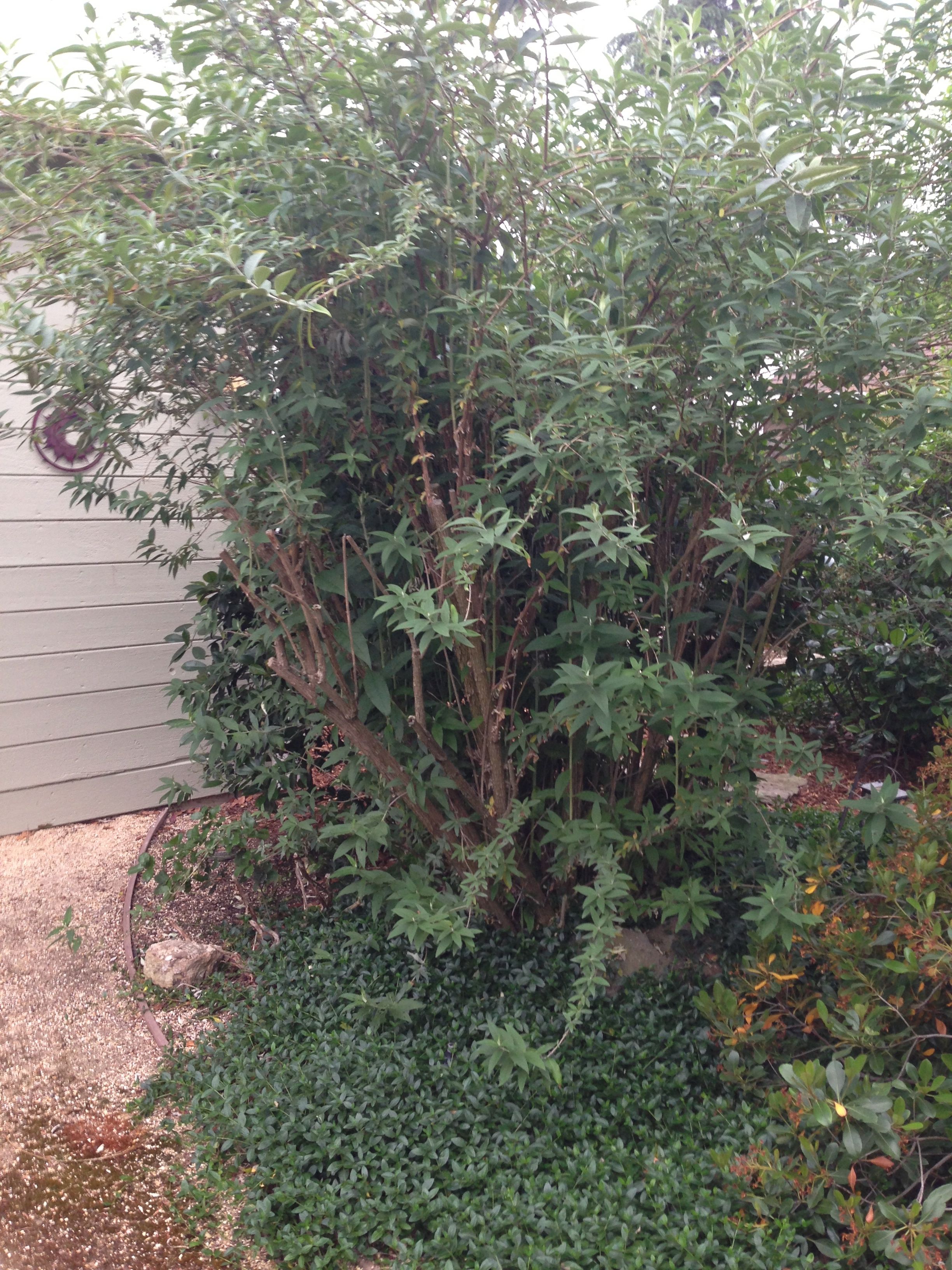 I planted the bush in honor of Ed, my high school teacher and mentor, who died nine months after we moved to Livermore. To the right of my Shed, a cat plays next to a pond—a fountain I bought shortly after Rug died.
  Rug, our bunny-soft-furred cat who was killed by a car three weeks before Ed died. And, of course, this is the shed that Gene built—Gene, my father-in-law. The man who called Tom Sweet Man when he was a little boy. Gene died three months after Rug and Ed.
My Writing Shed is a big part of the tapestry I wove while I was here in Livermore—the hometown I returned to.
As we prepare to leave, friends around us are experiencing major life events. One friend lost his brother to a grueling struggle with Parkinsons. Another learned he was going to be a father. This last weekend we attended the wedding of a friend who was widowed ten years ago, his heart mended by the grace of love.
We also learned that a writer who attended our salons had died suddenly of a massive heart attack. His widow thanked us all for listening to his words. I was grateful for the salons. Grateful that a writer had the opportunity to be heard.
I guess life really is a series of letting go, of knowing when a piece of the tapestry is complete—imperfection and all.
Writing this, I realize that I take my Writing Shed with me. It is a part of my tapestry. But, I don’t know what’s next, other than that we are moving to the North West in a few weeks. That is both exhilarating and scary.
Let go before you think you should.
Okay.
 Writing Shed