Weaving Our Fate

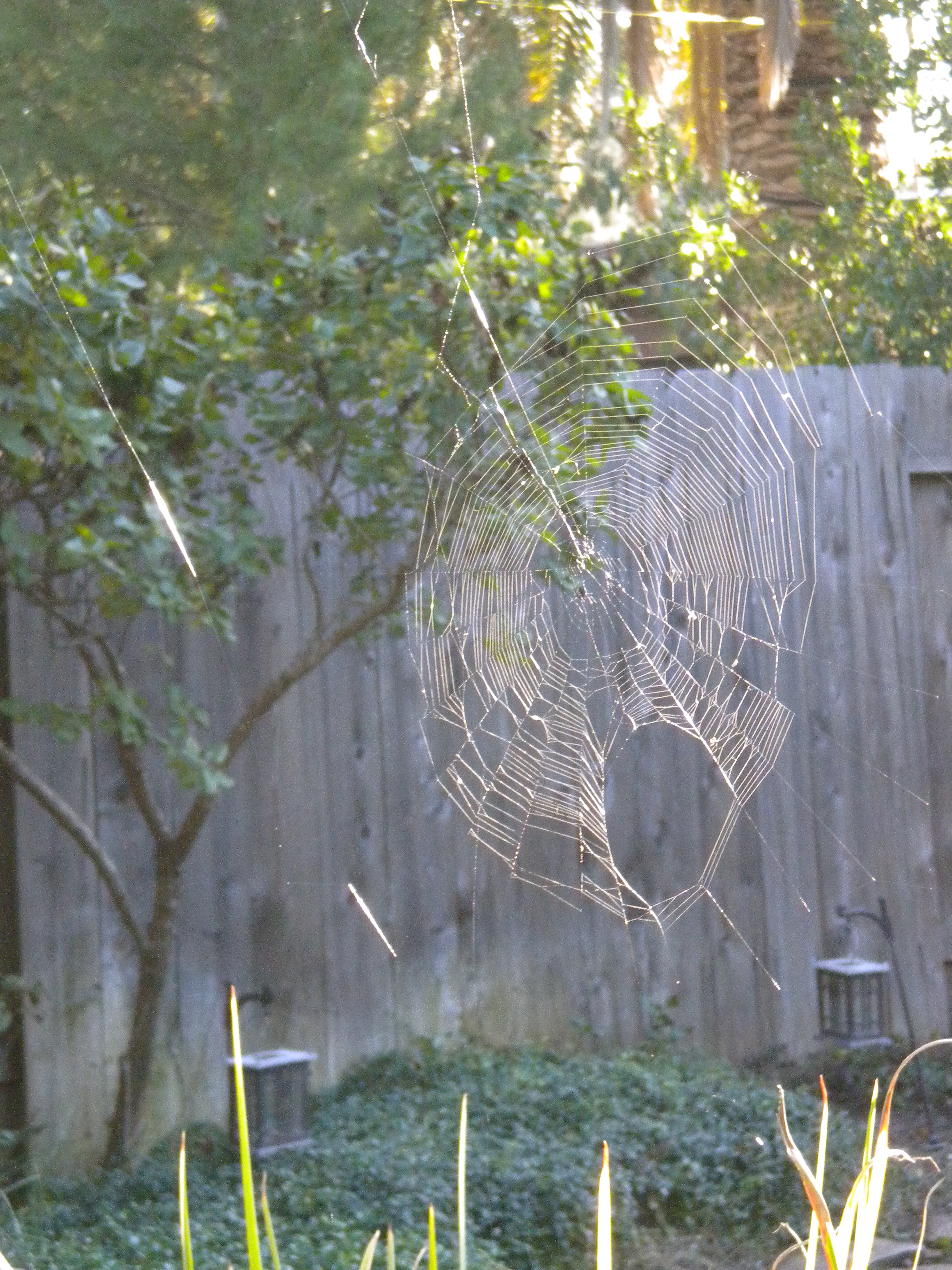
DSCN0251By acting on our creative opportunities, we take our fate back into our own hands. Such is the meaning of the Spider (High Priestess) card in the Animal Wise Tarot deck.

Fate. I usually resist that concept. One is fated for something. Has no choice in the matter.

Acting on creative opportunities to take fate back into my own hands puts a different slant on it.

Michelangelo said that he saw the statue when he picked out marble from the quarry. Then he would get to work releasing it from the marble.

My journey for a good many years was to find the innocence lost in my childhood—to restore it. I entered innocently into friendships, partnerships, jobs, with the assumption that my best interest was central to any agreements that formed the basis of the relationships. That is, I thought that my best interest was at the heart of the other party’s motivations.

I was stuck in the helplessness of childhood. That brand of innocence is actually a bit on the narcissistic side.

I don’t know when the light bulb lit up over my head. It has been there for a while, that light bulb, waiting for the switch to be flipped. I’m not even sure what made me flip the switch. But it was a revelation:

I didn’t need to restore my innocence. I needed to embrace experience.

Experience, not guilt, is the flip side of innocence.

Each one of us is living a story. It might be truly ours, or it might be one we think we are supposed to be living—one given us with such dogma that we think we have no choice but to live it. I think our job is to chip away at the dogma, much as Michelangelo chipped away at the marble slab, so we can release the story we are, not the one we think we are supposed to be. And our story comprises our experience.

My early experience showed me that there is darkness as well as light in the human heart. Maturity has allowed me to see that the darkness of another’s heart wasn’t and isn’t about me, but rather experience stuck in the darkness of shame, humiliation, and refusal to let go of innocence.

Maybe that’s the villain in us—refusing experience, holding onto innocence. The hero in us embraces experience as life, our life, and weaves it into our story.

My fate is my story. The story that is my life, comprising innocence and experience, light and dark, joy and sorrow.

We each have our own life story.

Once Upon a Time, I Knitted

Once upon a time I knitted. With emphasis on once.

I was 19. My grandmother knitted up a storm. She always had knitting needles, crochet hooks, or needle and thread in her hands. She hand stitched blouses right up until her death at 99.

So, when I was 19, I decided to knit. To make a scarf for my then boyfriend. This was a brief era when we (whoever “we” were) were trying to get back to the time before household appliances, TV dinners, and other labor-saving devices and products were introduced to make women feel okay about being sent back to housewifery after their “Rosie the Riveter” experience.

My grandmother showed me how to get started, but we never got around to the “casting off” part. I knew how to knit, but not how to stop. So I just stopped. I don’t know when the half-finished (if that) scarf with knitting needles attached disappeared—it just did.

Once upon a time, I almost experienced a tornado.

It was 2009, thirty years after I started my knitting “project.” I was in Iowa City for the Iowa Summer Writing Festival. The sirens started wailing on a Sunday evening as I walked to the first meeting for my class. The Mid Westerners strolled casually, while a woman from Seattle and I ran to the door of the first building, only to find it locked.

“The entrance is on the side,” someone said. Seattle woman and I trotted to the side of the building. I don’t know about her, but I was replaying all the disaster movies I had ever seen where those who can’t get in the locked door are doomed to be eaten by the monster, killed by the psycho, or swept away by the tornado.

That didn’t happen. Instead, I spent my first class meeting writing in the belowground floor of the natural sciences building, surrounded by glass-encased images of a giant grasshopper, the torso of an ape, and bird dioramas. An Iowa City resident tracked the oncoming tornado on her smart phone.

For an instant, hot air pressed in with a vise-like grip. A light film of sweat covered me. Then just as suddenly, it released its grip and cool air blew and the light film of sweat cooled me off.

The tornado had touched down a few miles away.

I remembered seeing my Great Aunt Neet’s Blackwell, Oklahoma, house after it got struck by a tornado in 1955. I was five. She was my grandmother’s younger sister. Her husband had grabbed her and their daughter and a mattress, carried them with his will to the bathtub in the inner bathroom and pulled the mattress over them. As the tornado raged above them, my great aunt and her daughter prayed while my great uncle cursed. Apparently that covered all their bases. They survived intact, but I believe their roof ended up miles away.

Knitting was on my mind this past week. Along with the tornado in Oklahoma.

The week before I had gone to Sequim, our new home, to make sure we had an actual home to which our movers could deliver our belongings. On Thursday, I was treated once again to an evening with my friend’s knitting group.

They meet once a week to eat, drink wine, share their lives, and knit. It’s an excuse to get together, so not everyone knits each week. But they do eat, drink wine, and share their lives. Sometimes, they knit at a local restaurant or wine bar. Once they met at the bowling alley. All so they support local establishments. Sometimes, they leave knitted balls to let them know they have been knit-bombed.

For the first time, I understood the mindfulness of knitting. I understood that where I see a ball of yarn (or is it a skein?), those who knit see how it can be transformed—into a blanket, booties, a sweater, or a scarf. That was the missing piece for me—the transformation of yarn into three dimensions.

And underneath the transformation of yarn, was the knitting of relationships. Plans were made to form a work party to tend the yard of a woman who was absent because her husband was in the hospital. Compliments passed around for the homemade soup served by the hostess, the asparagus grown and fresh picked by a retired corporate executive, the rhubarb-blueberry crumble made from fresh-picked rhubarb. And so on.

It’s what I have come to refer to as “womaning up”—embracing what I thought of as things of the home—and transforming them into a three-dimensional world. Creating community. Being free of destructive female competition.

My grandmother never really freed herself from that competition. In part because she excelled at those things of the home. She made sure she did. But, because it was a competition, it left no room for things outside the home—like being concerned for those outside one’s extended family.

So for years, I thought I had to eschew things of the home.

Those teachers in Oklahoma who threw themselves on top of their students to protect them—they womaned up. As did those teachers at Sandy Hook Elementary School.

I said in an earlier post that I think it’s time to woman up. I think that womaning up—fusing things of the home with things outside of the home—holds the promise for our future as a nation, as a world.

Perhaps, in my new home, I will learn how to transform balls (or is it skeins?) of yarn into a scarf.

Let Go Before You Think You Should

Those were the words of instruction on the Chucker package. A chucker is a long, bent piece of plastic with a claw on the end. It is designed for people like me who throw like a—well who can’t throw a ball more than 3 feet, but have a dog who’s fast and likes to run after the ball.

The first time I used it, the ball, instead of sailing gracefully down the dog park, landed one foot in front of me. Tessa (our dog) was not amused.

So I read the instructions. Something about winding up, lifting your arm straight, and then with a flick of the wrist the ball will sail down the dog park. The hint was: Let go before you think you should.

Well, of course. Let go before you think you should.

Letting go is actually pretty easy, I’ve learned. The difficulty is in discovering what it is I need to let go of.

Today, it has something to do with my Writing Shed. The actual shed. The place that became a place of refuge for me. A place where I wrote.

In about five weeks, I will be leaving it behind, turning it over to the new owners to do with it what they want.

I’m afraid I won’t be able to write without my Writing Shed.

It’s early in the morning. The birds have just started awakening, calling out to each other, perhaps battle cries as much as joyous greetings to the new day. A chicken bluck, bluck, blucks.

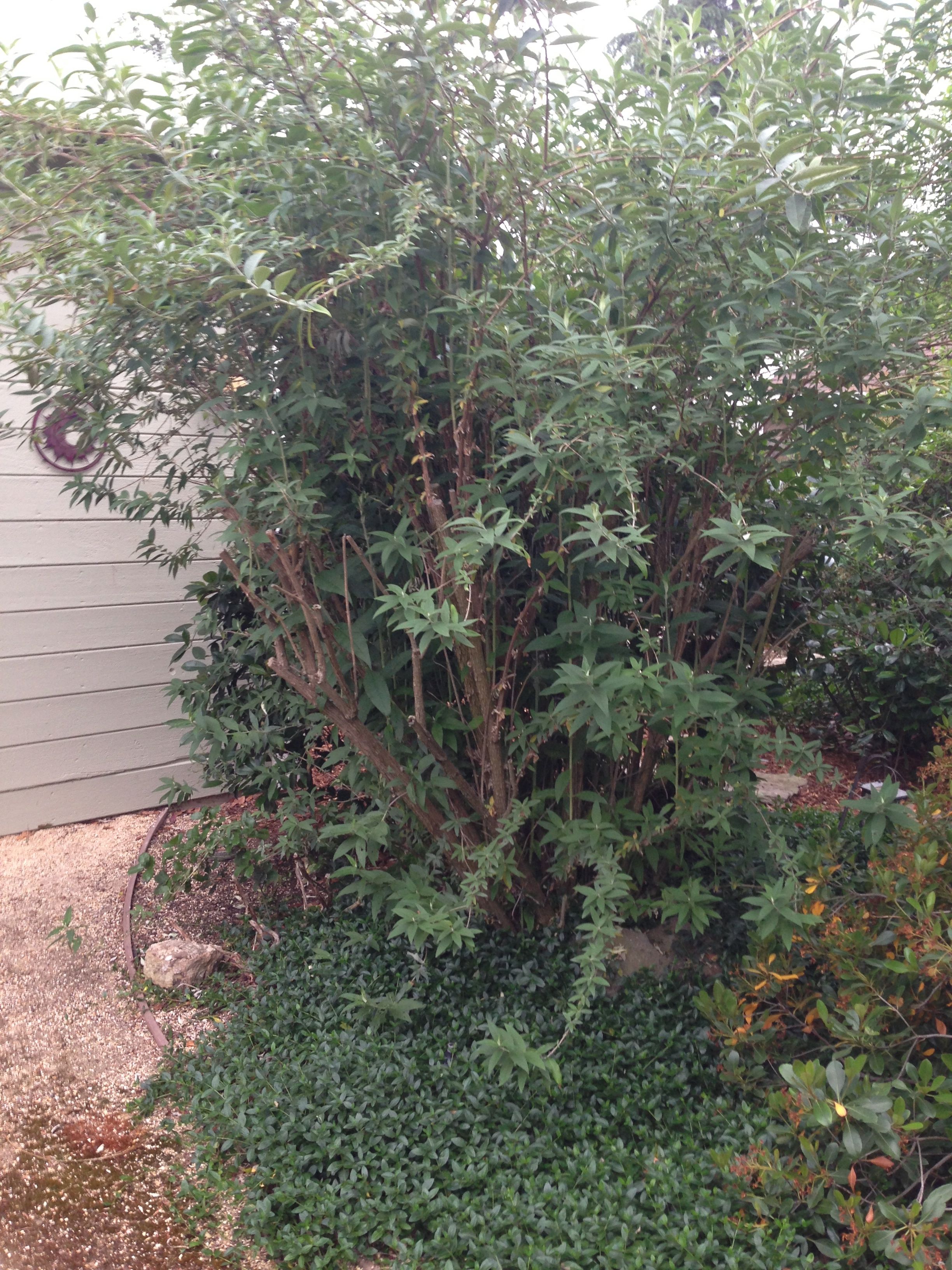
The arms of the butterfly bush flutter in the soft breeze at the edge of my Writing Shed. butterfly bushI planted the bush in honor of Ed, my high school teacher and mentor, who died nine months after we moved to Livermore. To the right of my Shed, a cat plays next to a pond—a fountain I bought shortly after Rug died. cat fountainRug, our bunny-soft-furred cat who was killed by a car three weeks before Ed died. And, of course, this is the shed that Gene built—Gene, my father-in-law. The man who called Tom Sweet Man when he was a little boy. Gene died three months after Rug and Ed.

My Writing Shed is a big part of the tapestry I wove while I was here in Livermore—the hometown I returned to.

As we prepare to leave, friends around us are experiencing major life events. One friend lost his brother to a grueling struggle with Parkinsons. Another learned he was going to be a father. This last weekend we attended the wedding of a friend who was widowed ten years ago, his heart mended by the grace of love.

We also learned that a writer who attended our salons had died suddenly of a massive heart attack. His widow thanked us all for listening to his words. I was grateful for the salons. Grateful that a writer had the opportunity to be heard.

I guess life really is a series of letting go, of knowing when a piece of the tapestry is complete—imperfection and all.

Writing this, I realize that I take my Writing Shed with me. It is a part of my tapestry. But, I don’t know what’s next, other than that we are moving to the North West in a few weeks. That is both exhilarating and scary.

Let go before you think you should.

Okay.

The Imperfection in the Tapestry

Those times of depression tell you that it’s either time to get out of the story you’re in and move into a new story, or that you’re in the right story but there’s some piece of it you are not living out. — Carol S. Pearson

I had heard for years that Indigenous American weavers purposely wove an imperfection into their tapestries to show their humility. God was perfect. They were not. Then I read somewhere, someplace, sometime that no, it wasn’t about humility. The intentional imperfection allowed life to come through.

I like to think that our lives are tapestries, with each experience changing the warp and woof, giving a rich texture to our life stories.

We are smack dab in the middle of staging our house for sale, which means we are ridding it of the tapestry that was us. Tom’s 7000 (that’s not a typo) classical CDs are packed, as is our collection of 3000 (also not a typo) DVDs. The pieces of art and craft we have gathered over the years are being carefully wrapped, packed, and stored until the final move. My writing shed is not longer my writing shed, though it will be where I write once the staging is complete.

I will create a new writing shed when we reach our final home in Sequim. In the meantime, writing shed has become a state of mind for me.

I started this blog so I could change my story.

My generation was the great believer in closure. Where my parents ignored, stuffed, guarded secrets, let shame isolate them, I dug up buried secrets, analyzed them, learned that that which seemed shameful was shared humanity.

I thought I would understand and by understanding would be able to unravel the parts of the tapestry that had haunted me, press a delete button for those parts of my life that were painfully without understanding.

During that last eleven years in my hometown Tom’s dad died, my mentor died, our beloved cat was killed by a car. My mother died.

I spent a good deal of the time trying to undo the loss of innocence I experienced when my uncle molested me, and in so doing, lost even more innocence. In a way, I hit bottom. Bottom is a good place. It shows you the boundary. I learned that trust is about boundaries. Mine. It is up to me to set them, protect them, and act when they are violated.

It occurred to me that until that moment I sat on my uncle’s lap, laps were a safe place, a refuge, a sign that I had found home. I think a good portion of my life I have been trying to get back home.

I did find home when I returned to my hometown. The home that is me—my life. I became my own refuge. I also found my family. Tom and his children and grandchildren. They are the children and grandchildren of my heart.

Uncovering secrets, shedding light on shame, analyzing, attempting to understand are all good things. They do not, however, give one closure.

Life doesn’t give us that. What it gives us experience. As we live and love, we cross paths with humans whose warp and woof reflect a wide realm of human experiences. Some have been damaged by their experience. Others have learned compassion.

We can direct the warp and woof of our tapestry. If our aim is perfection, it lacks texture. It is lifeless. If we let our experience change it, we learn to endure and celebrate.

Experience. It is the imperfection in the tapestry that let’s our life through.

Home Is Where Your Story Begins

The flag is at half mast again, a symbol of our mourning for those who were violently taken from us.

I moved back to my hometown eleven years ago. Tom’s father and my mother were entering the final chapters of their life stories. We needed to be a part of their stories.

We moved into my Tom’s family home. Two blocks to the east was the hospital in which Tom and his twin brother, Billy, were born. Billy died the next day. The hospital is now an assisted living facility.

Two blocks to the west is the duplex in which my grandparents lived and where, when I was eleven, my uncle invited me to sit on his lap, I accepted, and he molested me.

These past eleven years have been an emotional buzz saw for me.

My first task when we returned was to turn the family home into one that Tom and I could live in.

Tom’s mother spent the life after Tom was born stuck in a la brea tar pit of grief—that stage where we feel abandoned by god. She alternated between being angry that god would do this to her and despair that she would never be in his grace again since she could not accept that it was his will to take her baby away from her.

She’d died two years before we returned to Livermore.

Grief permeated the house. The curtains hadn’t been open for years. She’d saved every margarine tub and plastic bag that came into the house. Any loss was too much for her. Underneath a pile of newspapers that dated back 50 years, I found the telegrams that congratulated them on the birth of the twins, and the ones that came two days later offering condolences.

Her’s was a horrific story to be stuck in.

I cleared the house of grief, opened it to light, and brought beauty into it.

I believe it is a Navajo saying that if you don’t see and feel Beauty all around you, you are out of balance.

I thought Beauty abandoned me the day my uncle molested me. That is, I think, the biggest wound left behind after a rape or molestation. Shame and humiliation banish Beauty. The house we moved into was a good metaphor for that feeling.
As I chose colors, looked for the right granite for countertops, turned a mundane fireplace into a centerpiece, I was allowing Beauty to guide me. Beauty and I turned the yard that had been abandoned for years into a park-like setting. The shed Tom’s dad used to polish rocks became my Writing Shed.

I didn’t know until I just wrote that last paragraph that, in healing the house, I had healed myself. I discovered that Beauty had never abandoned me.

Tom and I are now readying the house to sell it. We are heading north to Sequim, Washington. I pulled the Wolf card from my Animal Wise Tarot deck the other day. It says that Raven is connected to Wolf—Ravens follow wolves, the book says. Raven’s mythology is that it goes into the darkness, finds the light, and brings it back. That is creation. The northwest, where we are moving, is rich in Raven lore.

My time here in my hometown has been a bit like running a gauntlet. But that is why I became a better writer. By delving deep into grief that was Tom’s mother’s, and then into that that was mine, I found my way back to balance. I went into the darkness, found Beauty, and brought her into the light. Creation.

I watched the parents and family members of those who were killed in Newtown yesterday, telling us by their presence that we should not turn away from their grief, we should not avert our eyes from their pain. Their courage breaks our hearts open.

If we listen, if we see, if we are willing to feel, we can restore our nation to Beauty. We can change the story.