The Scent of Lilacs

The lilac tree and bushes have blossomed in our yard.

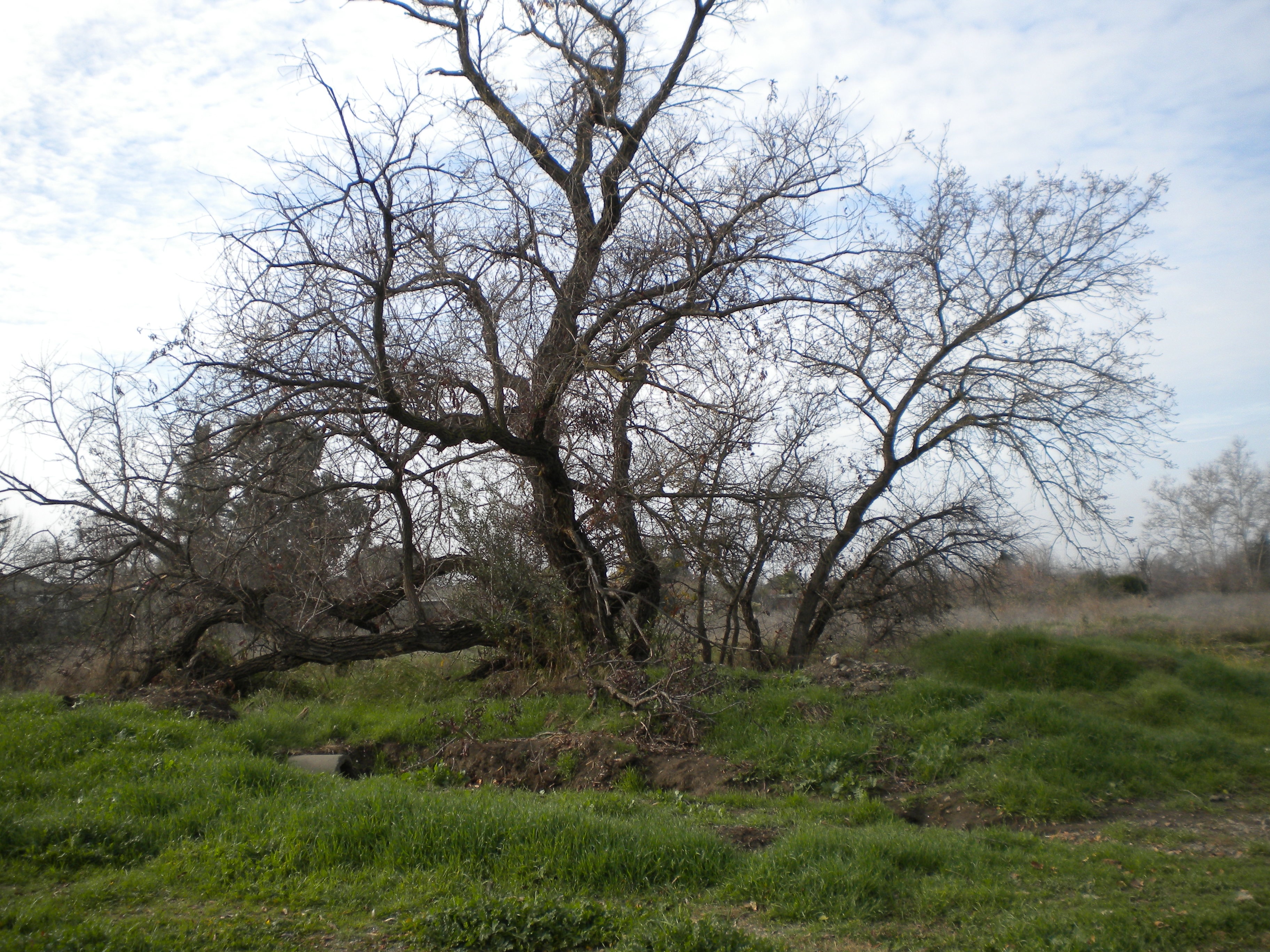
The tree is a particular miracle. We thought it had died when we took over the house. Now its gnarly bark, deep green leaves, and lilac flowers provide a spring sculpture in the garden.

Our whole yard is actually a garden. The birds seem to like it.

I don’t know where I’m going with the blog, or why I started with the lilac tree, so bear with me.

What is weighing on my heart right now is some advice I was given yesterday. I was, a woman told me, my own worst enemy. I was not really warm and fuzzy, she said if I felt passionate about something.

My delivery was the problem, she said.

This came from someone who had either witnessed or heard about (it’s not clear which) the outbursts of rage I had counted on as my homing beacon.

It also came from someone I liked. So I felt like I had to give it some consideration.

In light of what I wrote just two days ago – that rage had been my homing beacon – I could see why she might think that. And because shame seems to be the emotional hangover from rage, I felt ashamed.

I searched inside myself to determine what I felt ashamed of. Had I hurt anyone? Had I harmed anyone? Had I offended anyone?

Then I also remembered that she said, “Sometimes you just need to learn to swallow in this world.”

I didn’t have the presence of mind to ask her, “Swallow what?”

The answer to the questions did I hurt or harm anyone is no. At first I thought I might answer yes – that I had hurt or harmed myself. Then I realized that any harm that came to me came from trying to gain acceptance from a system that requires you to swallow – or as I sometimes put it – eat a shit sandwich and pretend it is chocolate. The harm didn’t come from the anger – it came from wanting blood from a turnip, thinking that it was my fault that the turnip couldn’t give me blood, and then being angry that there was nothing I could do to get blood from that turnip.

That’s what I mean about releasing demons. I learned to let the turnip be a turnip.

As to whether I offended anyone. I probably did. But that was not my intention. I think that sometimes, when you let the turnip be a turnip, it gets offended that you know it doesn’t have any blood to give you. And it doesn’t want to believe that.

It’s complicated because I know I’m the common denominator in a group of women who don’t like me – who really, really, really don’t like me. I have never experienced anything as vicious as what was directed at me by these women.

As I said, I learned what I wanted to be acceptable for, and sought those who found that acceptable.

It feels much better.

Yet, it was very painful yesterday to be told I wasn’t warm and fuzzy. That sounds like I was being mean, and I don’t think I was. I think I was just refusing to accept what was unacceptable for me.

I think that all of us, men and women, need to stop thinking that we have to smile when we eat a shit sandwich and act like its chocolate.

I started writing about the lilac tree to keep from writing about what was weighing on my heart. It didn’t work. It didn’t take me away from the weight.

But I trust that I started with it. Maybe it’s that because I watered it, the lilac tree began to thrive. In the spring, for a very short time, it blossoms and its blossoms have the scent of lilac.

It’s a light scent – lightly sweet.

It is what it is, that lilac tree. Old, gnarly, with blossoms that deliver a lightly sweet scent.

This Morning in my Garden

After the Storm, Lured into the Wilderness

Here’s to not burning people at the stake — ever again.

So what are angels? Perhaps the opposite side of demons. Instead of trying to keep you small, they tell you grow. And that is the soul’s journey, to grow and change.

I have been on blog hiatus for more than two months.

I meant to write blogs. I even started one or two. But I became consumed with directing Eve Ensler’s The Vagina Monologues. It was a great experience for me. It turned out that the roles I assigned to the actresses were just the right one for each of them. They were roles that forced each of them to go deeper — to find the vulnerable place in themselves that matched the material.

Being vulnerable on stage is courageous, and what is most effective in telling the story.

My job was to provide a safe place for them as they discovered and uncovered this place, and then brought it to the character.

My morning pages during this time period were interesting as well. As I read back through them, I found that I had written on more than one occasion that I didn’t seem to be having any epiphanies — that I seemed to be writing about very mundane things. Maybe they were mundane.

They open on December 8 with this:

So George was cremated today, and I feel at sixes and sevens.

On December 31st I wrote:

The fire (of my rage) has burned itself out because I found what I wanted to be accepted for and then found those who accepted me.

On January 3:

Being fearless I think means confronting fear and leaving it behind. Like the statue of David, fear and courage come together. Courage has something to do with the heart, and the heart is what determines the temperature at which a body is cremated.

On February 2 (Groundhog day):

In the end, you just love the person. The flaw in the tapestry that lets life through.

My final entry on April 5 included this:

So my world has become big enough for me to be in it . . . I started these (the book of morning pages) the day that George was cremated, and they will end with my resurrection.

I think the fire of my rage used to be my homing beacon. It showed me the way home when the demons told me I was getting too big for my britches; those voices got put through the emotional food processor of my quest for acceptance, and turned out — well a processed message that said “There is no safety in vulnerability.”

What I discovered was that the only way to find safety is by bringing compassion, rather than judgement, to vulnerability. That’s when my angels’ voices kicked in. The ones that said “Pay attention to fear, it leads you to your courage. Courage is in your heart. And the heart determines the temperature of cremation — it is the most enduring part of the temporal world we live in.”

I don’t need those fires of rage to help me find my way home now. I stopped wrestling with the demons. Instead I set them free. I thanked them for protecting me in the best way they knew how; explained that I knew where home was now. I didn’t need to stray from it to find acceptance that was not mine to find.

As I worked with each actress on her monologue, I came to appreciate what Eve Ensler has done with The Vagina Monologues. An article about the upcoming performance unleashed a flurry of comments — mostly from women I suspect. One was particularly upset that middle aged and older women were involved — that it was somehow particularly offensive that these women were moaning on stage. Another claimed that the play turned women into vaginal objects — rather than celebrate our intellectual capacity. Others were upset by the horrific stories. Better left untold they thought.

To me, these commenters missed the point. To me, the play brings to light that fear of women’s sexuality has provoked responses that make us mute this very vital part of our humanity. The responses range from genital mutilation to domestic violence to women being considered the spoils of war to women being shamed for the vitality of their sexuality. For me the play allows women to reclaim something that is essential to the temporal world we inhabit.

The women I directed were courageous. Some had been victims of domestic violence; some had been raped or sexually molested; those who worked at a shelter heard horrific stories every day. Others had just simply learned to mute their vitality by lessons passed down through generations of women who had learned to seek safety by denying their most vital selves. To tell the stories contained in the monologues, they had to experience their own anger, fear, and shame, and then transcend it.

They told the stories so that we can start changing the story that normalizes abuse and violence.

I didn’t even remember that Easter was the day before when I wrote that my pages would end with my resurrection. The day before that passage I had drawn the deer card from the Animal Tarot Card. Its meaning is the lure of the pursuit. The accompanying book notes that in many myths and fairy tales, the hunter is drawn into the wilderness in his/her pursuit of the deer. It is in wilderness that the hunter learns a new consciousness.

On the very last page of my morning pages I wrote this:

So I think the deer leading us into the wilderness is the thing. It takes us to those wild places that endure long after civilizations rise and fall. It takes us to the natural world, where the laws of nature show us true love: Love of ourselves. Love of others. I’ve connected with others in a way I’ve wanted. People whose hearts are open and willing to look.

It’s interesting what you can do when you find your home in the wilderness.

All photos are by Paul Hara — simply the best.

Prepare the Soul, Make it Ready, Move it to Tenderness

“That’s all we have, finally, the words, and they had better be the right ones, with the punctuation in the right places so that they can best say what they are meant to say.”
From “On Writing” by Raymond Carver

“Words lead to deeds . . . They prepare the soul, make it ready, and move it to tenderness.”
St. Teresa

I walked in the arroyo last week. It’s about two blocks from my house —a little bit of wildness that has endured as suburban neighborhoods developed around it.

I came back from my walk and grabbed the first book that caught my eye as I sat down to write in my writingshed: Call if You Need Me – the Uncollected Fiction and Other Prose, by Raymond Carver.

One of the reasons I am captivated by him is that he is of and from the West Coast. He went to Chico State — I lived in Chico around the same time (he started in 1958, I moved there in 1961). When he wrote about John Gardner, his mentor, taking them to sit on the lawn I could see the town and the campus. I was in junior high at the time and the college always seemed — well so college-like to me. Neither of my parents went to college, so it was an exotic setting to me.

He taught at the Iowa Writing Workshop in Iowa City — I attend the Iowa Summer Writing Festival and absolutely love Iowa City.

He got married at 19 and had two children by the age of 20. He became a raging alcoholic, relied on his wife to support the family, and treated her like shit – as alcoholics have a tendency to do. He had affairs himself, but nearly killed her by hitting her on the side of the head with a bottle when she dared to stray. They eventually separated and divorced.

He stopped drinking in 1977 and confronted the wildfire of his alcoholism, met the poet Tess Gallagher, who, I suspect was his soul mate, and went about his writing.

His early publication history is a bit of a horror story; his editor, Gordon Lish, edited his short stories without consent and then published them.

Carver wrote “Errand,” the short story about Chekov’s death from tuberculosis, in 1987. Shortly after it was published, Carver began coughing up blood. He was diagnosed with metastatic lung cancer and died in 1988 at the age of 50.

So even I am wondering what Raymond Carver has to do with my walk in the arroyo.

I think it has to do with the distant sound of a train.

One of my favorite things when I walk through the Arroyo is hearing a train pass through — a distant sound. I feel life simultaneously passing by and standing still.

I start to wonder who is on it, where they came from, where they are going. Are they running away from something? On the way to visit a relative? Maybe there’s a hobo or two riding the rails to wherever.

Of course, mostly now, the trains are carrying containers that get filled in far away ports and then placed on a train at the port of entry. Carrying things.

Yet that sound makes memory present tense for me — untethers it from time — while also giving it the context of reflection.

I think that turning those memories into words is what writing is to me. My voice.

All writers benefit from good editors. They help us identify where our voice is not clear.

But for an editor to do otherwise — as Lish did with Carver — is to wipe clear the sensory memory of the writer. For writers to relinquish those memories, that voice, as the price for acceptance, is to participate in their own oppression.

Even when the editor making the changes is the one inside the writer’s head.

I wonder if our voice is the hobo and the Arroyo: both a bit of wildness in the mundane world that is part and parcel of our everyday life.

Carver nearly lost his life to alcoholism. When he stopped drinking he began to stand up for his voice.

I found St. Teresa’ quote in “Meditations on a Line from Saint Teresa” — I think it is a talk Carver gave about writing —which is in Call if You Need Me – the Uncollected Fiction and Other Prose.

He concludes the piece with this:

“Long after what I’ve said has passed from your mind, whether it be weeks or months, and all that remains is the sensation of having attended a large public occasion, marking the end of one significant period in your lives and the beginning of another, try then, as you work out your individual destinies, to remember that words, the right and true words, can have the power of deeds.

“Remember, too, that little-used word that has just about dropped out of public and private usage: tenderness. It can’t hurt. And that other word: soul — call it spirit if you want, if it makes it any easier to claim the territory. Don’t forget that either. Pay attention to the spirit of your words, your deeds. That’s preparation enough. No more words.”

In the end what we have is our words. They should be the right words. They should be punctuated so they say what we mean them to say, so they have the power of deeds, so they can prepare our own souls and move them to tenderness.

Two things. I wondered if hobos still exist. They do. They have a convention each year in Britt, Iowa. I want to go to it.

And . . . checkout the lyrics to Woody Guthrie’s “Hobo’s Lullaby.”

Once Upon a Blue Moon

“Once in a blue moon” either means two full moons in the same month or thirteen full moons in the same year.

At one point in history, the moon did appear to be blue, but that was a result of the ash and gases released when Krakatau erupted. Didn’t have anything to do with the moon being made of blue cheese and ever since I saw a rabbit in the moon, I haven’t been able to see the man in the moon.

I don’t know what any of this has to do with my silence, but I haven’t written a blog for close to a month – since my friend George died. After writing about that, I didn’t know what to say. And then I learned that my friend’s eight-year old granddaughter died – killed in a crosswalk in Prague by a truck driver who was distracted by the weight of his own life.

I really didn’t know what to say after that.

The past decade has been top heavy with loss. I’m sure enduring it has made me stronger. But it’s also made me more fragile – leaving me with the skin of a snake that has just slithered out of its old skin.

I’ve been looking at that old skin, wondering what to do now that I’ve shed it. I’m a little scared to see that it is no longer a part of me. I’ve even tried putting it back on, but that’s like pushing string. It just doesn’t work.

So I have to deal with where I am right now. It’s a little bit scary.

My biggest epiphany as I wrote my way into the New Year in my morning pages was that my rage seems to have burned itself out. I just kind of noticed it was gone – the way the lighthouse keeper wakes up at two in the morning and asks “What’s that?” when the fog horn that goes off every hour on the hour doesn’t go off.

I think that for years my rage was my lighthouse, the homing beacon that showed me the way back to myself when the Greek chorus chanted, “You’re too big for your britches, you’re too big for you’re britches, who do you think you are?” over and over ad infinitum.

I’m embarrassed to say that I’ve sought out that chorus recently, hoping to find some comfort in the familiar. Like a horse running into the burning barn.

But there is no comfort in what was familiar.

Life is more fragile than I ever imagined. I see the photographs and videos of my friend’s eight-year-old granddaughter and wonder how can this be? How can a life force so strong be snuffed out with so little regard for rhyme and reason?

For some reason, it makes seeking the familiar to keep fear at bay a fool’s errand for me. My choice is to accept change as the only thing that is certain.

So here I am with a new chorus waiting for me to cue them up with a new refrain. And I wonder, what will I write?

Once in a blue moon, something rare happens. Life is fragile. I think it’s important to seize those moments.

A Solstice Greeting

Please feel free to share this greeting.