Sense Without Love

Eddie English, a long-time regular at the Wishing Well, where I tended bar in the late 70s, spoke like a James Joyce novel. He had three or more stories going at once, would slip easily between them as he spoke, gliding from beginning to middle to end at his own rhythm.

I could follow his narrative as long as I didn’t try. The minute I tried to make sense of him, I got lost in a Saragossa Manuscript that started in the middle then moved randomly between stories.

“Eddie,” I asked him once, “have you ever made sense?”

“What’s sense without love, darlin’?” He took a sip of his Manhattan and pierced my bartender veil with his intense blue eyes and his reply. “Nonsense.”

Sense without love is nonsense.

I thought of Eddie’s assessment this past week as Republican senators questioned Sonia Sotomayor.

They worry that she might not be qualified to render justice because she is Latina woman. Her life experience as a Hispanic woman taints her view of the world.

Empathy, they say, will skew her judgment. For example:

Because she is a woman, she might understand that her role in bearing a child is not simply that of incubation.

Because her affirmative action advantages were granted to her because of her potential, rather than by privilege of birth, she might understand that nobility is earned through grace under pressure.

Because she has lived life as a woman and a Latina she might have an authority of experience that questions the authority endowed through power and legacy.

Lindsay Graham wondered, what about her temperament? She is known to ask penetrating questions. He doesn’t like that. Doesn’t like being “bullied” by judges. Doesn’t like not being treated with the kid gloves boys in the old boys’ network treat each other. Perhaps finds it particularly uncomfortable coming from a Hispanic woman who in his experience is the one who cleans the house and tends the children of the privileged.

Some commentators are saying that the Republicans have succeeded in shooting down empathy as a value.

I hope not.

The country cannot endure such nonsense.

How the Past Flows into the Future

The present. That’s how the past flows into the future.

I don’t remember when I first heard that. I think it might have been in Michael Zimmerman’s American Literature class at San Francisco State University. I don’t know where he heard it.past to future1

Whether we’re there or not, that’s where we are at any given moment: the present.

No big surprise to me, I heard from my friend Jim after my last post, challenging my concerns about the National Ignition Facility – or rather my concerns about the application of the knowledge we might get from creating a star in a bottle, as the Lab’s PR describes it.

past to future maybeIf I want my grandnieces and -nephews to have energy in the future, fusion might be the answer, Jim admonished me. Besides, fusion-fueled weapons have been with us for 50 years, so what’s the big deal, he asked.

This morning, as I started writing this blog I decided to listen to Joni Mitchell’s CD “The Beginning of Survival.” As I opened the case, I remembered that its title comes from a phrase in a letter (attributed to Chief Seattle) that was sent to the American president in the mid nineteenth century:

Your destiny is a mystery to us. What will happen when the buffalo are all slaughtered? The wild horses tamed? What will happen when the secret corners of the forest are heavy with the scent of many men and the view of the ripe hills is blotted by talking wires? Where will the thicket be? Gone! Where will the eagle be? Gone! And what will happen when we say good-bye to the swift pony and hunt? The end of living and the beginning of survival.

So to Jim, here’s what I would say: I wonder if as a culture, we have become so concerned about survival we have forgotten how to live.

I have no idea what will be in the future. I’m not even sure that we can save the earth. I think the earth is smart enough to save itself; it just might have to sacrifice humankind in order to save itself.

What I do think we can do is draw from our experiences in the past to inform us in any given present moment. But, of course, making present decisions informed by the past is also tricky. Anyone who has repeatedly ended up in the same relationship, regardless of how the outside trappings looked, knows that it might take several mistakes to learn the lesson.

For me, a lesson learned came one afternoon as I stood on a cliff overlooking the Marin Headlands after spending an afternoon in Muir Woods. With the memory of the cool majesty of the redwood trees lingering on my skin, it was as if I looked off into infinity, the ocean stretching out before me, the horizon touching the sky. I understood that I was alone but also a part of everything.past to future infinite

Finite and infinite.

It disturbs me that a goal of NIF is to master the power that powers the universe. The finiteness of our individual lives disqualifies us for that job.

I am not anti-science. Quite the opposite. I think science gives us a view into the universe that inspires awe – not at science but at the mysteries.

I just think any attempt to exert control over the future is folly. All we can do is draw from our past experience, embrace the life that is our present, acknowledge our mortality, and then take the next best step.past to future last

We love this earth as a newborn loves its mother’s heartbeat. So if we sell you our land, love it as we have loved it. Care for it as we have cared for it. Hold in your mind the memory of the land, as it is when you receive it. Preserve the land and the air and the rivers for your children’s children and love it as God loves us all.
Chief Seattle

Go here for a brief history of Muir Woods.

The Bearable Vultureness of Being

“Yes, it (vulture) is a little gross because it is one of the garbage collectors of the environment, cleaning up the dead, helping to eliminate problems with disease and such, but it is also one of the more powerful animals of rebirth and healing.”
From the Animal-Wise Tarot, by Ted Andrews.

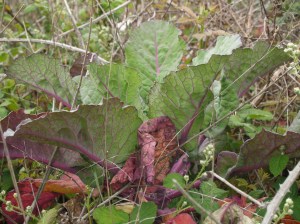
I think this is a vulture.

I think this is a vulture.

Wow!

I drew the Vulture card this morning. As I wrote in an earlier blog, I like using Tarot cards, particularly the Animal-Wise deck, as a way to give me a picture of what’s going on – a metaphor if you will.

I’ve noticed birds more ever since that afternoon in the bird room at the Natural Science Museum at the University of Iowa. They definitely inhabit my yard. Their songs let me know that it’s first light of the day. An owl across the street let’s me know that life goes on in the darkness.

I’ve always loved watching turkey vultures in the air. They are so eloquent. One roosted itself on a wire outside my house one day, stretching its wings for no apparent reason other than to feel itself stretch. Its wingspan was magnificent.

“Vultures soar, using their highly developed sight and sense of smell to detect food. They trust in the life cycle, knowing they will eventually have something to eat because everything that is born dies. Everything that dies is reborn.”
From the Animal-Wise Tarot, by Ted Andrews.

They know there’s enough to go around.

I was taught early on that there wasn’t enough to go around. In my heart of hearts, I didn’t believe it. But, I tried to wear it as if I believed it. I made myself smaller in order to fit in. It’s never been a successful strategy. It pissed me off, which made me bigger.

Change is inevitable, Ted Andrews goes on to say. Vultures remind us of that. It’s time to tear down the old so the new can be born.

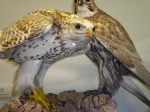
This hawk has nothing to do with the blog. I just like the hawk.

This hawk has nothing to do with the blog. I just like the hawk.

I’ve been saying lately that I think Lawrence Livermore Lab needs to change its mission. There is much hoopla about the National Ignition Facility (NIF) that was dedicated in late May. The purpose of the facility is to see if we can fuse the nuclei of two hydrogen atoms to create helium, which would release energy.

The benefit, according to the latest pr from the lab is the promise of clean energy. Earlier pr lauded it because it gave us a way to maintain our stockpile of nuclear weapons. Another benefit sold to Congress was that it provides a vital facility for training a new generation of nuclear weapons scientists.

In the video “Tapping Star Power for Clean Energy” on GreenTv.com, Jeff Wisoff, Prinicpal Assoc. Director of NIF says that future generations will look back on NIF as the time when humankind “. . . mastered the power that powered the universe.”

Uh oh.

It seems to me that humankind has been notoriously unsuccessful in mastering the powers of the universe. I’m not sure why one would even want to. It seems to me that all we can really do is be a witness to them.

I am not necessarily opposed to the attempt to achieve fusion. I even think it might be okay to fund the experiment simply because it would be a very cool thing to do – who knows what insight we might get from witnessing it.

But if the mission of the Lab revolves around nuclear weapons (masked as national security), fusion will inevitably be used by the dark destructive side of humankind.

So, what if the mission of the Lab were more along these lines:

To explore the mysteries of the physical universe so we can better understand our relationship to it.
Mission of Lawrence Livermore Lab as wished by Karen Hogan

Then, maybe, there could be a poet in residence at the Lab, whose mission would be to explore our internal universe – what makes us human – the dark and the light sides – so that we can better understand our place in the universe. It would require a poet with the genius of a Shakespeare who could also understand the science of it all – but hey! – poets like that exist.

Now that would be a fusion that could really release some energy.

I think we would certainly learn that there’s enough to go around.

Phew! I was wondering how I was going to get back to that.

When we recognize and work with the cycle of birth, death, and rebirth, Ted Andrews says, we become more efficient, we waste little energy and effort.

So, since I am very proud of how I redefined the Lab’s mission, I think I should apply that effort to myself.

My old mission was to fit in. It was based on the belief (that I actually didn’t believe) that there isn’t enough to go around. That was someone else’s story.

My new mission is to fit inside my skin, knowing there is enough to go around, so that I can live my story – and stretch my wings for the sheer pleasure of feeling them stretch.

I did some surfing to learn more about NIF. Here is one of the more interesting articles I found. It’s by Hugh Gusterson, who spent sometime in Livermore as an anthropologist, studying the nuclear culture. His book, Nuclear Rites, documents that study.

In the Shadow of Birds

I have no idea why it was the red cappuccino machine that surprised me when I got home. We’d had it for a few months. But somehow, it stood out on the counter – a surprising marker that I had returned. Back in Livermore California.

The red cappuccino machine

The red cappuccino machine

There were thunderstorms here before I left. But they were nothing like the thunder and lightning I heard and saw as I walked back to my hotel after sitting out the tornado warning in Iowa City. The sky looked primitive. As if primal soup was brewing – waiting for the big bang to create a new universe.

Earthquakes are more scary, one of the workshop participants said. “At least with tornadoes, you get a warning.”

Yet, somehow, I got no comfort from the warning. I wasn’t scared. I just felt that I was at the mercy of – well, I don’t think I even know whose mercy I was dependent upon.

As we scratched our pens across notebooks in the hallway of the Natural Science Building, the air closed in. I couldn’t see it. Couldn’t smell it. Couldn’t taste it.

But my body felt it – hot, humid, thick air closing in around me. A very slight, but discernable vise-like band tightening around my head, my ears plugging up – like during takeoff – and a film of sweat covering my body, like in a sweatlodge.

And then it was gone. The pressure released, the evaporating sweat cooling my body.

Letting go. Like when the heat in the sweatlodge gets so intense all you can do is let go – and let in.

It’s been twenty years since I participated in sweatlodges on the beach at Bolinas. I had to drive a half an hour, walk through a field that was home to cows, who weren’t sure they could trust me, to get to the cliff overlooking the beach, and then climb down a narrow path to get to the sweatlodge.

It was a journey that had a definite before and after. Whatever concerns and turmoil I brought to the sweatlodge were gone afterwards – the intense heat of the lodge forcing me to get into my body and then let go and let life in.

Circumstances hadn’t changed. But I had.

It was because of last year’s floods in Iowa City that my writing workshops were held in the Natural Sciences building – the newer English and Language buildings were built down the hill from the older buildings, closer to the bank of the Iowa River. The river poured into them and they haven’t yet recovered from the damage.

So, it was the natural sciences that hosted writing workshops. The hallway in which I sat out the tornado warning had glass cases filled with a giant grasshopper and lobster and the torso and head of a giant ape (a replica, no giant apes were harmed in the making of the cases).

Bird dioramas filled the third floor. At the entrance is this quote:

“There is no square mile of the surface of the planet, wet or dry, that has not been crossed by the shadow of a bird . . .”
James Fisher, The World of Birds

owls2And there on display, were birds whose shadows had crossed the surface of the planet: from ostriches to hummingbirds to penguins. Most of the dioramas were more than a hundred years old, dating back to the last decade of the nineteenth century.

From the other side of the display, a bird skeleton, ready for flight, looked like a shaman raising her arms in supplication or blessing.

On the one hand, I realized that a lot of birds gave their lives for these dioramas. On the other, I was in awe of the range of environments birds can inhabit – can cast their shadows.

My artful essayist workshop spent most of one afternoon with the bird dioramas.

I have been going to Iowa City every summer for the past five years to attend the Iowa Summer Writing Festival. There is always a definite before, during, and after for me.

The before part is anticipating it. This year, I was even nervous.

The during part has to do with immersing myself in writing and being among people – instructors and workshop participants – who are there for the writing – for where the writing will take them.

“This is your tribe,” the Festival director said in her opening remarks for the weeklong session I attended.

The during part is letting magic work its course.

The after part is returning to the mundane having traveled the course of magic.

So maybe the red cappuccino maker sitting on my counter surprised me because I am in the beginning of the after part – returning to the mundane .

In my imagination, birds live a life filled with magic. Most sing. Most fly. Some dance to woo a partner. But, perhaps for them, it is just what they do. The mundane routine of their lives.display2

DSCN0014On my first morning home, I made a cappuccino, using my red cappuccino machine, took it to my writing shed and wrote. Later, I organized my laundry. Later still, I drove down First Street and saw that the Vine Theater was showing The Wizard of Oz as its noontime free movie.

If they are looking at me, I wonder if birds think I live a life filled with magic.

There’s No Place Like Home

Dorothy Gale is swept away to a magical land in a tornado and embarks on a quest to see the Wizard who can help her return home.
Wizard of Oz plot summary from IMDB.

“Iowa heat. Tornadoes. Now you can mildly get Dorothy’s point of view,” my friend from Chicago emailed me the morning after I sat out a tornado warning in the corridor of the Natural Science building on the University of Iowa campus. A two-foot long grasshopper sat across from me, sharing his glass case with a lobster.

It was the first meeting of my week-long writing workshop.

The woman next to me wrote about capturing grasshoppers and putting them in Skippy Peanut Butter jars when she was a young girl. When I was little, my father returned from an “exploration” in the empty quarter and described an Arab scooping a grasshopper out of the air and popping it in his mouth.

“Remember, Jesus ate locust and honey in the desert,” my mom said, trying to give us some context.

Locust. Grasshoppers. They’re all the same.

In their own way, my parents weren’t afraid to let the tornado take them to Oz. We moved to Saudi Arabia because my dad, an electrician, had trouble finding work, and working in Saudi Arabia was lucrative.
After two years, when we got our “long” vacation, we boarded a Dutch Freighter, the Wonosobo, in Dammam and spent the next seventy-five days sailing from port-to-port in the Far East as a means to return to California for a two-week visit with family.

We boarded the day before Thanksgiving. As we set sail for Karachi, the Dutch crew made us a turkey-with-all-the-fixin’s to make us feel at home. To give us a taste of their home, they made my brothers and I three-foot high gingerbread men for St. Nicholas Day.

In a strange way, I think that my dad’s interest in travel was his way of getting back home. He’d been raised on a farm in Iowa. They moved into town after losing the farm due to the Depression and alcohol-inspired decisions by my grandfather. Buster, my dad’s collie, disappeared shortly after they moved into town – my grandfather gave him away when my father was at school. My grandfather’s beatings increased in frequency and intensity.

Without fields to roam through and a dog to comfort him, my dad became dislocated – at sea surrounded by Iowa farmland. He joined the Navy as soon as he turned seventeen, and exploring unfamiliar people and lands rather than familiar Iowa landscapes gave him a new sense of place in the world.

I was out of place waiting for either the tornado to appear or the all-clear siren to wail that night. live in California, so the uncertainty – am I in danger, am I doing what I need to keep myself safe – was unfamiliar. With earthquakes, you’re just uncertain. They come without warning. With that, I am familiar.

Near the end of my week-long class, I learned that since I had last seen her in Iowa City, my instructor’s nineteen-year old cat died three months earlier – two weeks after she had her last round of chemotherapy.

“I didn’t want the week to be about that,” she said. About the cancer.

But it’s really never about that, about being in Oz. It’s about finding your way back home once you’ve seen Oz. Returning to the familiar after being pitched into the unfamiliar and learning to live anew.

I couldn’t tell whether the second set of sirens that wailed that first night were the all-clear sirens or the take-cover sirens. I stepped out into the night, anyway, knowing that a tornado might touch down on me and take me to Oz so I could find my way back home.