
She being me. Or is it she being I? To hell with it. I can make a cherry pie. That is the point.
 Pie was something we had at Thanksgiving and Christmas. Pumpkin pie. Store bought. I know my mother never made a pie from scratch, and I’m not sure my grandmother did either, though she cooked everything else. I think Grandma was more on the cake side. She loved the Karo syrup and egg white frosting I learned to make in Home Ec when I was in the seventh grade.
Or was it in the eighth grade?
Whatever, it was a time when girls took Home Ec and boys took shop.
But, we never learned to make pie. Or to be more precise, piecrust. Yet, that is the crux of the biscuit so to speak, the piecrust, when it comes to pie.
I did not appreciate pie until I had my mother-in-law’s pie. It did not matter what kind, I loved it. I even liked her lemon meringue pie, which was not cloyingly sweet as most I had tasted.
I asked her once if she could teach me how to make piecrust and she said I should watch her make it sometime. But we never got around to that.
I have been working on a novel in stories for the past several years. Pie has always been in the stories, but recently I realized pie was a character in the stories. It became imperative that I learn to make piecrust in order to fully realize the character of pie.
I started on a Sunday. I knew I needed a pie tin, a rolling pin, and a pastry cutter. So I headed to the local kitchen supply store. It was closed. I did what I hate doing and have only done twice before in my life (and took a shower afterwards), I went to Walmart—the only place open that would have kitchen supplies.
I found the cooking tools section, selected a French-style wooden rolling pin (just because I like the feel of it), a pastry cutter, a pie pan, and a thingie on which I could roll out the dough.
Then I headed to the canned goods section to look for pie filling. I was baffled by my selections. I noticed an older woman close by. “Do you know anything about making pie?” I asked.
“Sure,” she said, “head over to the baking section and buy yourself some pre-made piecrust.”
“Oh,” I said, I can’t do that. “I’m writing a story and I have to make it by hand—like women did during the 40s and 50s.”
She understood. Told me to go to the library and check out a Betty Crocker cookbook from the era for the recipe, then told me to cut the butter (or lard or Crisco) into the flour until it made pieces the size of her pinkie fingernail. Then she, said, buy two cans of the pie filling, one wasn’t enough.
Betty Crocker was already checked out so I got two other books—all about pie.
Pie, it seems, is a topic unto itself. In one, I learned that there are some very strange attitudes about making crust, including one from an incredibly sexist chef who claimed the piecrust served that day was not good because his pastry chef was menstruating when she made it.
Sigh.
Once upon a time, there was more homemade pie, the book continued. And then women went into the workplace. Pie, it said, took time and intention. Something in short supply for women.
I became even more intimidated. My pie making collection sat on the counter for a good three weeks.
And then rounded off Pi Day happened: 3.14.16—it happens once every 100 years.
Of course! That was the perfect day to start my quest to make a pie. I downloaded a Betty Crocker circa 1950 recipe from the Internet.
The day passed. Pi, but no pie.
But here is what did happen on Pi Day. I learned that “Goodnight, Sweetman,” the third of the stories in my novel in stories, had been accepted for publication in Tidepools magazine and was awarded first prize.
This is my first official acceptance for publication.
I’m a little embarrassed that being published has been a gnarly, annoying, burdensome burden for me. I don’t do what you’re supposed to do. Send things out. Get over the rejection. Send it out again. I have received rejections, but not that many because I just haven’t sent things out the way one is supposed to do to get published.
So this is a bit of a miracle for me, but also not. I think the timing was right because I did not feel like the acceptance validated me as a writer.
Here’s what it did do. It made me feel that my work had been seen, and would be seen. And, I think that is what I think is important about being published. Your work gets seen. I want my work to be seen and hopefully that once it is seen, will make the reader feel like they are moved and feel the connection to what it means to be human.
Back to pie.
The next day, the ides of March, I took Lady Macbeth’s advice. I screwed my courage to the sticking place, cleaned off the island top, gathered my tools and began.
I cut the butter into the flour, adding more when the nice little crumbs didn’t appear. I set out a Pyrex cup filled with ice water and added a tablespoon. Use a fork to mix it in, the recipe showed.
Don’t overwork the dough is what everyone said was the key to making a good piecrust. Which feels a little bit to me like tearing the tag off the mattress or pillow and then you read it is against the law to do that. How do you know it’s been overworked and when will the pie police send you to jail?
And then, a memory wafted through my brain.
“It’s the tenderness of mixing the wet with the dry,” a woman had said to me once, the imaginary flour and water streaming through her moving hands.
I set the fork aside and let my hands dance to mix the wet with the dry until I was pretty certain I had worked the dough just enough but not too much. I formed it into two balls, flattened them, then covered them in plastic wrap and set them in the refrigerator for the 45 minutes instructed in the recipe.
I unrolled the awesome thingie I bought to roll out the dough. It had multiple circles, each one inscribed with a marker indicating the size of the crust. I rolled out the dough, pl aced it in the pie tin, added the pie filling, rolled out the top crust, placed it over the cherries, cut off the excess crust, and then used a fork to make marks along the edge. I placed the pie in the oven, checked at the proscribed time, then let it go a little longer until I thought it looked golden brown. (Golden brown is one of those things. Just what the hell does golden brown look like?)
Then I set it on the rack to cool and contemplated. Writing, it seems, is a bit like making a pie. You really do want someone to eat your pie and hopefully enjoy it. Be enriched by it. Likewise with what you have written.
Also, you don’t want to overwork or underwork the story, but you mostly have to rely on your instinct to know when you’re done writing and ready to serve it.
A good story, I also think, has something to do with the tenderness in the mixing. Elizabeth Strout, as she has a way of doing, gobsmacked with a quote from her newest book, I Am Lucy Barton,
“I think it was the next day that Sarah Payne spoke to us about going to the page with a heart as open as the heart of God.”
That quote showed me the way to tenderness for my characters.
Including pie.
I posted my progress with my pie making on Facebook the day after Pi day, including how impatient I had become waiting for my pie to cool. Warm pie tastes really good, a friend commented.
Approach my pie with a heart as open as the heart of God.
 And so I cut a piece of pie, poured myself a glass of milk, and dug in. It might not have risen to my mother-in-law’s level, but it was sure as hell not store bought. It had texture and the taste blended with the filling to transform it into something new.
Pie.
Earlier this week, I watched Everything Is Copy, the HBO documentary about Nora Ephron, written and directed by her son Jacob Bernstein. She is one of my favorite writers. I love her authenticity and that she writes all of the above. She doesn’t confine herself to one genre or type of writing, and she loves romantic comedies.
I took it personally when she died.
Everything Is Copy ends with a recitation of the list she included as the last chapter in her final book, I Remember Nothing. I did not know she was dying when I read it. The title of the last chapter she calls, “What I Will Miss.”
Her kids, her husband, dinner with friends, Paris, butter, and so on. And finally . . .
Pie.


 “In the first decades of the 20th century, the conservationist William Finley paddled a little boat through the marshes of the basin and came upon a colony of egrets slaughtered by plume hunters, the young left to starve. Out of hundreds of thousands of egrets that had once nested in Malheur Lake, only 121 were left.
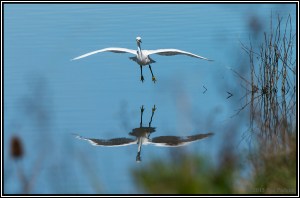 One where only 121 egrets survive.
 It’s been a momentous year. Some who were with me when I wondered what my trip around the sun in 2015 would bring are no longer here. And then there was Tom’s dance with cancer.
 I think that is probably what I mean by the doldrums, absence that is a profound presence. The price of loving—feeling the profound presence of one who is absent. And yet, loving is well worth the price.
 Writing Shed