When God Hates the Same People You Do . . .

“You can safely assume that you’ve created God in your own image when it turns out that God hates all the same people you do.”
(from Traveling Mercies by Anne Lamott; on page 22 of Bird by Bird she attributes this quote to “my priest friend Tom”)

I went to the Tea Party rally in Pleasanton on Thursday.

Given that I was once accused (with humor) of being a pinko commie bedwetter, this probably sounds peculiar.

And, given that my brain can, without warning, switch from an accepting Zen state of being into my screaming-body-painted-blue-with-the-head-of-my-enemy-dangling-from-my-horse’s-neck Celtic warrior, one might wonder at the wisdom of my wading into such a gathering all by myself.

And yet, I did.

First, it was peculiar seeing all the signs complaining about being taxed so heavily when the headlines were stating that most people were paying fewer taxes this year. I shouted this fact as I drove by, but the sign holders were not amused.

As Pat Paulsen would say, “Picky, picky, picky.”

I decided (the accepting Zen part of me) that my goal there was to engage and try and understand where these people were coming from.

Carly Fiorina had a booth there. As did the Republican Women and Republican Party.

I stopped a couple on the way in. He was wearing a tee shirt emblazoned with a portrait of Reagan. Did you know Reagan grew government, I asked. Actually, I don’t remember his answer to that one.

He tried to tell me that corporations are individuals because they are a group of individuals who join together. I was so taken aback by his reasoning that I didn’t have the presence of mind to remind him that a corporation is a group of individuals who have absolutely no accountability for what that group does. Think of Bhopal, for example.

His wife said that she thought of every president as her president but this one. My Celtic warrior slipped out, “Oh right, this one is black.”

She told me I should be ashamed of myself for accusing her of being racist.

Someone shouted to me as the couple and I part ways, “You must be a Democrat.”

“I’m an American,” I replied.

I asked a man who carried an impeach Obama sign what Obama had done to meet the criteria for impeachment. The Constitutional requirement for impeachment was high crimes or misdemeanors. What high crime or misdemeanor had he committed?

“Who are you?” he replied.

At a booth that featured Obama Czar cards, I asked the man who was selling the cards why Health Care reform was unconstitutional. After a lot of stumbling I finally said, “I think that what you are saying is that the individual mandate is what you think is unconstitutional.”

He met my question with glazed eyes. A woman who was standing at the booth said that she had to listen to my kind of crap all the time and thought this would be a day where she wouldn’t have to hear any of it. I explained that I was trying to understand what he or she meant by Health Care Reform was unconstitutional. She ignored me and to show her defiance, bought a deck of cards.

The man at the booth didn’t thank me for helping him make the sale.

I asked another man why Medicare wasn’t socialized medicine. Because we paid into it with our taxes he said. We ended up shaking hands – he even hugged me.

There were those who said people were flocking here from Canada and places like England to get their health care because they didn’t like what they got in their own country. No one mentioned how he or she was paying for it.

And finally, on the way out I asked a woman who was carrying a sign that says that government is wildly out of control why she thinks that. Frankly, I don’t remember everything she said, but this was the most satisfying and also, sadly, revealing conversation I had all day. Another woman, wearing a red Tea Party tee shirt joined us.

Given that government intrusion in our personal lives was an issue, I asked if a woman should have the right to choose. The issue of partial birth abortions came up. I said I thought that decision needs to be between a woman and her doctor.

What if a woman says that after eight months she’s tired of being so uncomfortable and just wants to end her pregnancy, she asked.

Well, how do you answer that question.

The woman wearing the red tee shirt said that yes, a woman needs to have the right to choose.

Then the woman with the government-out-of-control sign asked whether teenage girls should be able to have abortions without their parents’ permission or knowledge.

Yes, I said, and before I could answer further the woman with the red tee shirt said, “Yes, because it could be a result of incest.”

What are you doing wearing that tee shirt, I wondered.

Then, I asked if Obama is a natural born citizen. And of course up came the why doesn’t-he-show-us-his birth-certificate-no-not-that-one thing came up.

The Muslim thing came up. That he was born a Muslim. Okay, he isn’t and I’m not sure that one can be born a religion, but I asked, “Okay, can you be a Muslim and an American.”

Neither was so sure of that one.

The sign-carrying lady brought up that Obama slipped and said he had visited 57 states during the campaign. “There are 57 Muslim states she said.”

Okay, that one blew out both my Zen and Celtic warrior brain, but I refrained from shouting “What the fuck?”

We spoke for a few more minutes. The sign-carrying lady accidently released some spittle while she spoke – not as in spewing spittle, but you know, one of those embarrassing moments. She worried that I would think she spit on me. I assured her I knew she hadn’t.

We all went our separate ways.

So here is my conclusion after being at the event:

I can live with difference of opinions about health care, the role of government, size of government, and so on.

But what seems to me to be at the base of this movement is fear and anger: fear of the changing face of America and the world, and anger that they their side lost the election. I am concerned that this group thinks that freedom means freedom from having to live in a diverse culture, a diverse world.

I came of age in the Sixties, when the Civil Rights Movement led to an interpretation of the Constitution as a protector of the inherent dignity of the individual. Informing that time, for me anyway, was World War II and how the Concentration Camps showed the depth of depravity prejudice against groups of people can be taken to.

To me, the brilliance of the Constitution is that it recognizes that darkness resides in the heart of human beings, and provides a mechanism for ensuring that laws that come out of the blackest of places – those places that are fueled by fear of the other – can be overturned.

For me, freedom and liberty are about respect for the dignity of the individual. That’s why I think health care is a right, not a privilege. We do not have the best health care in the world if treatment exists, but is rationed by ability to pay.

It concerns me that the Republican Party is embracing this movement. For too long, they have used fear – fear of the other – as their method for galvanizing people. Fear is one of the basest of human emotions – it makes one do crazy, irrational things as an individual; when it is used to amass people, it leads to cruelty.

Obviously, we all have a right to our own opinion. We do not, however, have the right to construct the world in our own image. We might want to, but that doesn’t give us the right to.

That way leads to the human equivalent of the La Brea Tar Pits.

I believe we need leadership that show us a way around that.

The Scent of Lilacs

The lilac tree and bushes have blossomed in our yard.

The tree is a particular miracle. We thought it had died when we took over the house. Now its gnarly bark, deep green leaves, and lilac flowers provide a spring sculpture in the garden.

Our whole yard is actually a garden. The birds seem to like it.

I don’t know where I’m going with the blog, or why I started with the lilac tree, so bear with me.

What is weighing on my heart right now is some advice I was given yesterday. I was, a woman told me, my own worst enemy. I was not really warm and fuzzy, she said if I felt passionate about something.

My delivery was the problem, she said.

This came from someone who had either witnessed or heard about (it’s not clear which) the outbursts of rage I had counted on as my homing beacon.

It also came from someone I liked. So I felt like I had to give it some consideration.

In light of what I wrote just two days ago – that rage had been my homing beacon – I could see why she might think that. And because shame seems to be the emotional hangover from rage, I felt ashamed.

I searched inside myself to determine what I felt ashamed of. Had I hurt anyone? Had I harmed anyone? Had I offended anyone?

Then I also remembered that she said, “Sometimes you just need to learn to swallow in this world.”

I didn’t have the presence of mind to ask her, “Swallow what?”

The answer to the questions did I hurt or harm anyone is no. At first I thought I might answer yes – that I had hurt or harmed myself. Then I realized that any harm that came to me came from trying to gain acceptance from a system that requires you to swallow – or as I sometimes put it – eat a shit sandwich and pretend it is chocolate. The harm didn’t come from the anger – it came from wanting blood from a turnip, thinking that it was my fault that the turnip couldn’t give me blood, and then being angry that there was nothing I could do to get blood from that turnip.

That’s what I mean about releasing demons. I learned to let the turnip be a turnip.

As to whether I offended anyone. I probably did. But that was not my intention. I think that sometimes, when you let the turnip be a turnip, it gets offended that you know it doesn’t have any blood to give you. And it doesn’t want to believe that.

It’s complicated because I know I’m the common denominator in a group of women who don’t like me – who really, really, really don’t like me. I have never experienced anything as vicious as what was directed at me by these women.

As I said, I learned what I wanted to be acceptable for, and sought those who found that acceptable.

It feels much better.

Yet, it was very painful yesterday to be told I wasn’t warm and fuzzy. That sounds like I was being mean, and I don’t think I was. I think I was just refusing to accept what was unacceptable for me.

I think that all of us, men and women, need to stop thinking that we have to smile when we eat a shit sandwich and act like its chocolate.

I started writing about the lilac tree to keep from writing about what was weighing on my heart. It didn’t work. It didn’t take me away from the weight.

But I trust that I started with it. Maybe it’s that because I watered it, the lilac tree began to thrive. In the spring, for a very short time, it blossoms and its blossoms have the scent of lilac.

It’s a light scent – lightly sweet.

It is what it is, that lilac tree. Old, gnarly, with blossoms that deliver a lightly sweet scent.

This Morning in my Garden

After the Storm, Lured into the Wilderness

Here’s to not burning people at the stake — ever again.

So what are angels? Perhaps the opposite side of demons. Instead of trying to keep you small, they tell you grow. And that is the soul’s journey, to grow and change.

I have been on blog hiatus for more than two months.

I meant to write blogs. I even started one or two. But I became consumed with directing Eve Ensler’s The Vagina Monologues. It was a great experience for me. It turned out that the roles I assigned to the actresses were just the right one for each of them. They were roles that forced each of them to go deeper — to find the vulnerable place in themselves that matched the material.

Being vulnerable on stage is courageous, and what is most effective in telling the story.

My job was to provide a safe place for them as they discovered and uncovered this place, and then brought it to the character.

My morning pages during this time period were interesting as well. As I read back through them, I found that I had written on more than one occasion that I didn’t seem to be having any epiphanies — that I seemed to be writing about very mundane things. Maybe they were mundane.

They open on December 8 with this:

So George was cremated today, and I feel at sixes and sevens.

On December 31st I wrote:

The fire (of my rage) has burned itself out because I found what I wanted to be accepted for and then found those who accepted me.

On January 3:

Being fearless I think means confronting fear and leaving it behind. Like the statue of David, fear and courage come together. Courage has something to do with the heart, and the heart is what determines the temperature at which a body is cremated.

On February 2 (Groundhog day):

In the end, you just love the person. The flaw in the tapestry that lets life through.

My final entry on April 5 included this:

So my world has become big enough for me to be in it . . . I started these (the book of morning pages) the day that George was cremated, and they will end with my resurrection.

I think the fire of my rage used to be my homing beacon. It showed me the way home when the demons told me I was getting too big for my britches; those voices got put through the emotional food processor of my quest for acceptance, and turned out — well a processed message that said “There is no safety in vulnerability.”

What I discovered was that the only way to find safety is by bringing compassion, rather than judgement, to vulnerability. That’s when my angels’ voices kicked in. The ones that said “Pay attention to fear, it leads you to your courage. Courage is in your heart. And the heart determines the temperature of cremation — it is the most enduring part of the temporal world we live in.”

I don’t need those fires of rage to help me find my way home now. I stopped wrestling with the demons. Instead I set them free. I thanked them for protecting me in the best way they knew how; explained that I knew where home was now. I didn’t need to stray from it to find acceptance that was not mine to find.

As I worked with each actress on her monologue, I came to appreciate what Eve Ensler has done with The Vagina Monologues. An article about the upcoming performance unleashed a flurry of comments — mostly from women I suspect. One was particularly upset that middle aged and older women were involved — that it was somehow particularly offensive that these women were moaning on stage. Another claimed that the play turned women into vaginal objects — rather than celebrate our intellectual capacity. Others were upset by the horrific stories. Better left untold they thought.

To me, these commenters missed the point. To me, the play brings to light that fear of women’s sexuality has provoked responses that make us mute this very vital part of our humanity. The responses range from genital mutilation to domestic violence to women being considered the spoils of war to women being shamed for the vitality of their sexuality. For me the play allows women to reclaim something that is essential to the temporal world we inhabit.

The women I directed were courageous. Some had been victims of domestic violence; some had been raped or sexually molested; those who worked at a shelter heard horrific stories every day. Others had just simply learned to mute their vitality by lessons passed down through generations of women who had learned to seek safety by denying their most vital selves. To tell the stories contained in the monologues, they had to experience their own anger, fear, and shame, and then transcend it.

They told the stories so that we can start changing the story that normalizes abuse and violence.

I didn’t even remember that Easter was the day before when I wrote that my pages would end with my resurrection. The day before that passage I had drawn the deer card from the Animal Tarot Card. Its meaning is the lure of the pursuit. The accompanying book notes that in many myths and fairy tales, the hunter is drawn into the wilderness in his/her pursuit of the deer. It is in wilderness that the hunter learns a new consciousness.

On the very last page of my morning pages I wrote this:

So I think the deer leading us into the wilderness is the thing. It takes us to those wild places that endure long after civilizations rise and fall. It takes us to the natural world, where the laws of nature show us true love: Love of ourselves. Love of others. I’ve connected with others in a way I’ve wanted. People whose hearts are open and willing to look.

It’s interesting what you can do when you find your home in the wilderness.

All photos are by Paul Hara — simply the best.

Between the Storms

For two days, the rain was relentless. Not the kind of rain that’s nice to walk in. The kind of wind-driven rain that makes you want to take cover, stay inside, drenches you to the bone when you venture outside even to cross the street.

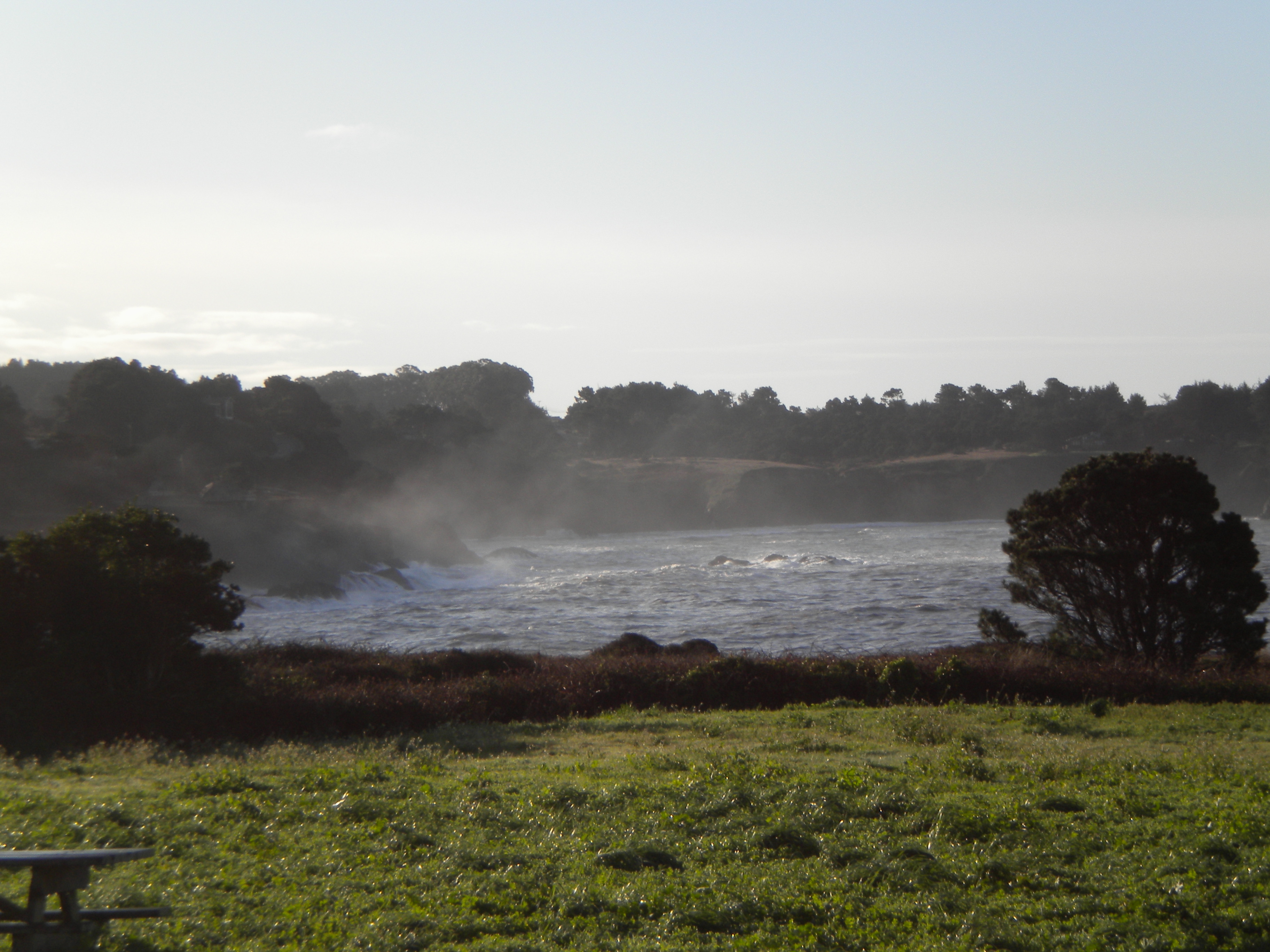
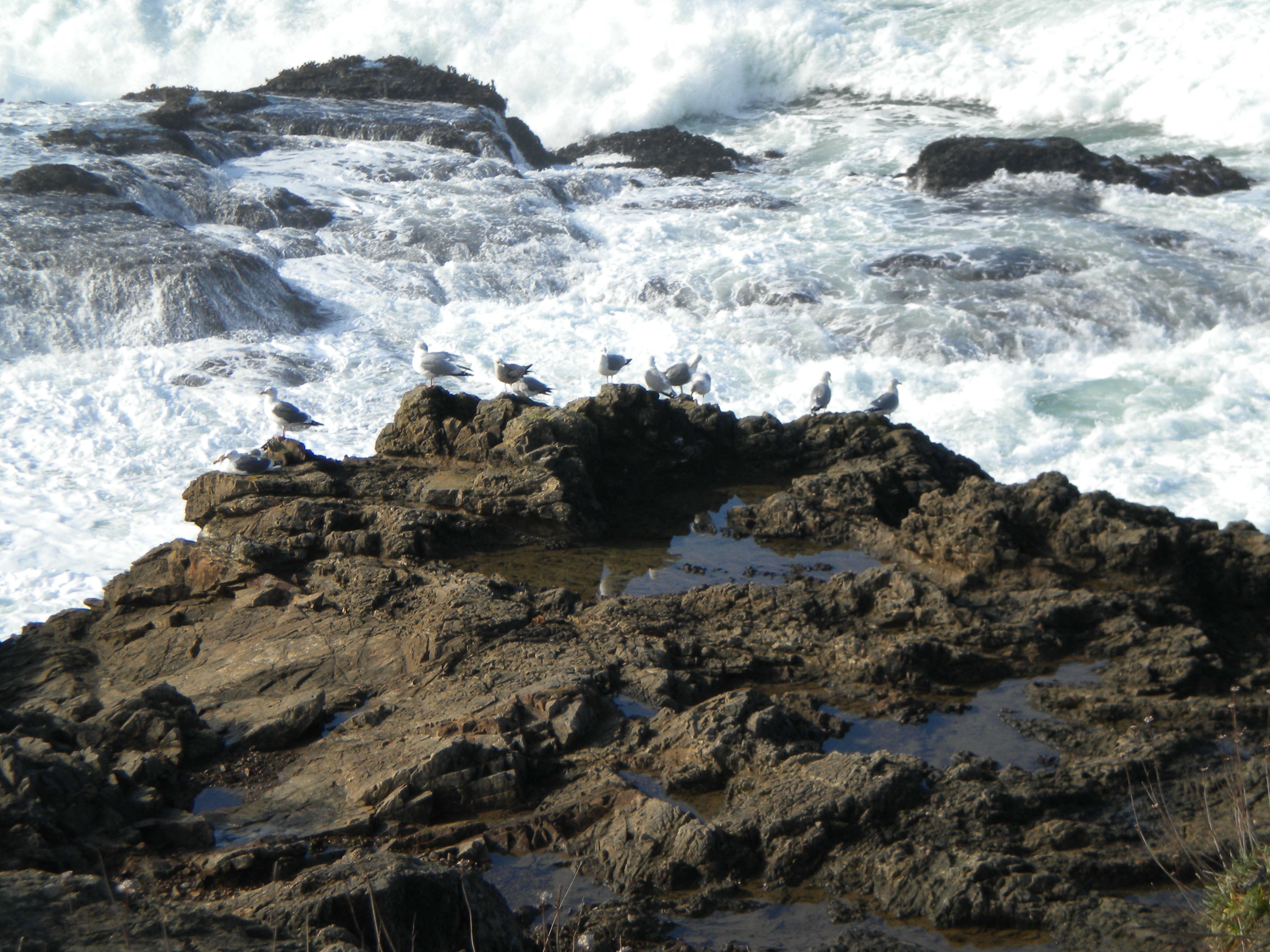
Huge swells brought waves crashing ashore. You get it that you are at the ocean – the edge of your world and out there could be dragons or such.

It just kept raining. All Sunday and all Monday.

Then this morning – spectacular California coast blue skies with occasional puffs of clouds.

The next storm is expected on Thursday.

First. Thanks be to the storms. We need the rain. We’ve been in a drought for three years now. We might even be able to catch up – depending on how much El Nino has to bring us.

But right now, we are between storms.

“I can see clearly now the rain is gone. I can see all the obstacles in my way.”

I love those lyrics. The clarity storms bring. Not clear sailing, but what we have to pay attention to. What is in our path that we need to confront or go around.

Getting away always does this for me. Especially when I am near the ocean. It helps me put myself in perspective

I think the thing that has been the most difficult for me with moving back to my hometown is that it is landlocked. I was 15 minutes away from Muir Beach when I lived in Mill Valley. I could go there after a long day at work.

A woman I met at an Iowa Summer Writing Festival class who lives in Iowa said she liked the extremes of weather they have in Iowa (it got down to 15 degrees below zero this year and there was a tornado warning this past summer when I was there).

I think the extremes here on the left coast are best seen on the coastline. “Stay away from the beaches,” the woman who served us breakfast at our B&B told us yesterday. Rogue waves, sneaker waves yank people off the beach and carry them away – perhaps never to be seen again.

One has to respect the grandeur of Nature.

So here I am between storms – and maybe between stories; the one that used to be and the one I’ve been rewriting. The story I want to live.

The obstacles I see have to do with fear and anger. How do I mobilize my anger to effect change, and how do I confront fears so I can move forward fearlessly. I read lately that being fearless does not mean being without fear – rather it means feeling fear and acting in spite of it. Not letting it stop you.

My anger right now is mostly about how politicians are using fear to secure their power. It makes me insane. I don’t have a clue as to how to mobilize that anger so that we can be a fearless nation.

Those are my obstacles: fear and anger.

Between the storms.

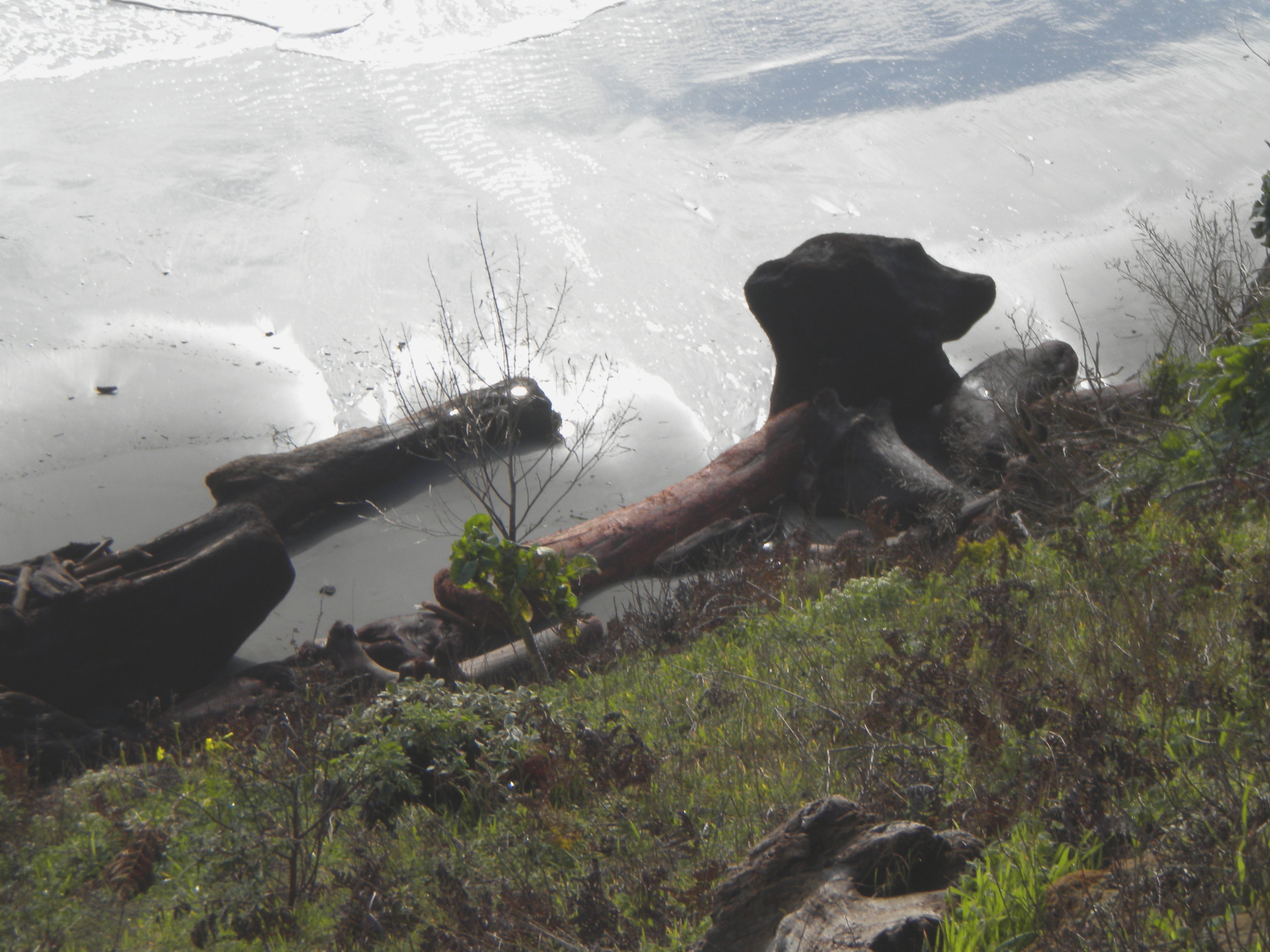
I’d say it’s a beautiful day today, but I thought yesterday was beautiful, too. The storm brought new sculptures of driftwood to the beaches. And waves are still crashing against the rocks.

Prepare the Soul, Make it Ready, Move it to Tenderness

“That’s all we have, finally, the words, and they had better be the right ones, with the punctuation in the right places so that they can best say what they are meant to say.”
From “On Writing” by Raymond Carver

“Words lead to deeds . . . They prepare the soul, make it ready, and move it to tenderness.”
St. Teresa

I walked in the arroyo last week. It’s about two blocks from my house —a little bit of wildness that has endured as suburban neighborhoods developed around it.

I came back from my walk and grabbed the first book that caught my eye as I sat down to write in my writingshed: Call if You Need Me – the Uncollected Fiction and Other Prose, by Raymond Carver.

One of the reasons I am captivated by him is that he is of and from the West Coast. He went to Chico State — I lived in Chico around the same time (he started in 1958, I moved there in 1961). When he wrote about John Gardner, his mentor, taking them to sit on the lawn I could see the town and the campus. I was in junior high at the time and the college always seemed — well so college-like to me. Neither of my parents went to college, so it was an exotic setting to me.

He taught at the Iowa Writing Workshop in Iowa City — I attend the Iowa Summer Writing Festival and absolutely love Iowa City.

He got married at 19 and had two children by the age of 20. He became a raging alcoholic, relied on his wife to support the family, and treated her like shit – as alcoholics have a tendency to do. He had affairs himself, but nearly killed her by hitting her on the side of the head with a bottle when she dared to stray. They eventually separated and divorced.

He stopped drinking in 1977 and confronted the wildfire of his alcoholism, met the poet Tess Gallagher, who, I suspect was his soul mate, and went about his writing.

His early publication history is a bit of a horror story; his editor, Gordon Lish, edited his short stories without consent and then published them.

Carver wrote “Errand,” the short story about Chekov’s death from tuberculosis, in 1987. Shortly after it was published, Carver began coughing up blood. He was diagnosed with metastatic lung cancer and died in 1988 at the age of 50.

So even I am wondering what Raymond Carver has to do with my walk in the arroyo.

I think it has to do with the distant sound of a train.

One of my favorite things when I walk through the Arroyo is hearing a train pass through — a distant sound. I feel life simultaneously passing by and standing still.

I start to wonder who is on it, where they came from, where they are going. Are they running away from something? On the way to visit a relative? Maybe there’s a hobo or two riding the rails to wherever.

Of course, mostly now, the trains are carrying containers that get filled in far away ports and then placed on a train at the port of entry. Carrying things.

Yet that sound makes memory present tense for me — untethers it from time — while also giving it the context of reflection.

I think that turning those memories into words is what writing is to me. My voice.

All writers benefit from good editors. They help us identify where our voice is not clear.

But for an editor to do otherwise — as Lish did with Carver — is to wipe clear the sensory memory of the writer. For writers to relinquish those memories, that voice, as the price for acceptance, is to participate in their own oppression.

Even when the editor making the changes is the one inside the writer’s head.

I wonder if our voice is the hobo and the Arroyo: both a bit of wildness in the mundane world that is part and parcel of our everyday life.

Carver nearly lost his life to alcoholism. When he stopped drinking he began to stand up for his voice.

I found St. Teresa’ quote in “Meditations on a Line from Saint Teresa” — I think it is a talk Carver gave about writing —which is in Call if You Need Me – the Uncollected Fiction and Other Prose.

He concludes the piece with this:

“Long after what I’ve said has passed from your mind, whether it be weeks or months, and all that remains is the sensation of having attended a large public occasion, marking the end of one significant period in your lives and the beginning of another, try then, as you work out your individual destinies, to remember that words, the right and true words, can have the power of deeds.

“Remember, too, that little-used word that has just about dropped out of public and private usage: tenderness. It can’t hurt. And that other word: soul — call it spirit if you want, if it makes it any easier to claim the territory. Don’t forget that either. Pay attention to the spirit of your words, your deeds. That’s preparation enough. No more words.”

In the end what we have is our words. They should be the right words. They should be punctuated so they say what we mean them to say, so they have the power of deeds, so they can prepare our own souls and move them to tenderness.

Two things. I wondered if hobos still exist. They do. They have a convention each year in Britt, Iowa. I want to go to it.

And . . . checkout the lyrics to Woody Guthrie’s “Hobo’s Lullaby.”