Following your Bliss – the Path of Joy and Sorrow

I attended Bliss last night – the annual fundraiser for Maitri, the hospice run by the San Francisco Zen Center. The facility primarily serves people with end-stage AIDS, but it was where my friend George spent his final days last year. His life was ended by a sarcoma.

George had been a Maitri Board member for years.

The event was held at the Presidio in the Golden Gate Club. What a place. No longer a military post, the grounds that overlook the Bay and Golden Gate now is home to wonderful creative endeavors, including Industrial Light and Magic. Acres and acres of creativity, beautiful architecture, and a forest of native trees.

What a place to celebrate the work that Maitri does and the lives that have passed through its facility.

Taiko drums greeted guests on the patio as they entered the event. But these were not traditional Taiko drummers. I call them the Taiko Drum Crones. There was such joy in their performance. A Gamelan orchestra performed, then provided the music for Balinese dancers, who told a story with their hands, their feet, their body, and their eyes.

This slideshow requires JavaScript.

George died five months ago today. Maitri certainly provided the house of shelter for George’s pilgrimage towards death. Their attention to the aesthetics, including their providing nourishing food that was pleasing to the palate as well as to the eye, is a reminder that we are living even as we are dying.

It is to me what compassion for being human is about.

George’s passing happened in the fast lane. It barreled down that road at lightning speed – a bare 15 months between his diagnosis and death.

Now, five months later, life continues. The lilacs that burst into bloom in my garden are already fading. They have had their moment in the sun.

A few days ago it was cold and rainy. Today the air of the blue sky is somewhere between spring and summer. It is a gentle day.

Life is change. Follow your bliss.

I used to wonder what my bliss was. I thought it had to be something big. The dictionary defines it as profound happiness.

So much of my life has been spent measuring the value of what I was doing by whether I was being nice enough. And nice meant making people happy and keeping them happy.

Which is, of course, an impossible task. Happiness is fleeting.

I don’t like that word happy, or happiness. It seems so limiting to me. For me it does not embrace sorrow, and I don’t think you can experience true joy if you are not willing to also embrace sorrow.

Joy leads to sorrow and sorrow leads to joy.

I saw that last night.

And so, my bliss is found in the answer to the question that wall keeps insisting that I answer before it will let me pass: what do you want to do with your time and your life?

Having the faith to follow your bliss – well, that is a challenge. But then, so is life.

Life in the Fast — and Slow — Lane

There are many paths to choose from, and none of them go anywhere. Yet you must carefully choose which path you will take.

Jean Shinoda Bolen, from Crones Don’t Whine

I found the phrase “life in the fast – and slow – lane” in my last book of morning pages. I wrote it about six weeks after my friend George died.

I’m not even sure why the phrase bubbled up again as I wrote this morning, but I think is has something to do with my wondering whether I should Twitter. As I look back at that last sentence, I realize that “should” is the word that dominates for me.

I heard recently that an agent said he would not even touch a writer who did not have a platform – platform comprising Facebook, a blog, and Twitter. For each, you have to have a following.

A friend of mine who Twitters told me recently that she had been off it for twelve hours and had already lost ground.

Oh, my. Or, as my old Irish grandmother would say, “Fook!” (I love the way the Irish pronounce fuck. It has all of the heft, but seems to lose some of the stigma attached to using the word.)

I was a technical writer for more than twenty-five years. I prided myself on learning technical concepts quickly and understanding how they applied to our daily lives. Twenty years ago, I worked for Hayes, the leading modem company at the time. Their new business purpose was to integrate telephone technology – which hadn’t progressed much since it was first introduced – into computer technology.

Now I have an iPhone. I can take a call, surf the Internet, and send an email simultaneously — though I don’t usually do that. My email can reach a recipient who lives half way across the globe within seconds.

Science fiction isn’t.

This brings me back to Twitter. Remember that old telephone company ad that encouraged us to “Reach out and touch someone” with a phone call? How happy it made the receiver of the phone call to hear from the person who initiated the phone call?

I appreciate that Twitter technology has the potential to let us reach out and touch thousands of someones – with 140 characters or less.

What I want to do is tell story, so I wondered if one could do that in 140 characters or less. Then I remembered Ernest Hemingway’s famous six-word story:

For sale.
Baby shoes.
Never worn.

Thirty-two characters, including spaces between words and line breaks.

I also remembered words that came to a friend on Twitter in which a woman described the emotional scene engendered by the mechanics of taking care of her father after an operation. “Over time,” she wrote, “this will be more graceful.”

I have never seen a more poignant description of that emotionally confusing moment when a parent has to relinquish the power of caretaker over to the child.

So one can tell a story in 140 characters or less. And that is an interesting challenge for a writer.

My problem is with the notion that I can’t be away from Twitter for twelve hours or I will lose ground – that the relationships I built through Twitter might not endure a twelve hour gap in attention. That seems more like a one-night stand than a connection to me.

Yet, I’m fascinated by the potential of Twitter for a writer. Actually, I am fascinated by the potential of Twitter to create connections around the world.

But, for me, the important word is “connection.”

I’m definitely more of a face-to-face person. I like to have coffee or a meal with friends. For me, that is the grace of everyday living: taking the time to spend time with someone and letting the conversation take us wherever it leads.

I am at some kind of a crossroads at this moment. As I move into the world with my new story firmly implanted in my heart, I find that I come up against a wall. It isn’t a brick wall. It is a wall that insists that I answer the question, “What do you want to do with your time, with your life?” before it will let me pass.

I pulled the Komodo Dragon card this morning from the Animal Tarot deck. Dragons, it says are not to be slain, but to be tamed – to be tamed so we can use their fiery energy to benefit our creative souls. It is a part of the suit labeled Ancients.

The song “Danny Boy,” I read might have been written during the Irish Diaspora – that period of time when so many Irish left their homes for lands far away. Wake-like social events were held the nights before they departed. They were wake-like for in truth – their departure was like a death. Chances were they would never see their families again. A letter sent might arrive long after the recipient had died.

So I understand that technology can connect us. How much easier would it have been on them if they could have heard the voice of their loved one? Or received an email seconds after it was sent? Or even a 140-character-or-less Tweet sent by an Irish immigrant from Dublin, California that said something like:

I scrunch my toes into the green hill above my house and feel you beside me.

What I hope to accomplish with my stories is to write about those moments that give us an epiphany of what it is to be human – to understand that we are mortal, and that it is in our mortality that we find the purpose of our lives.

I want to live life in the fast lane that is the future, but to know when to switch to the slow lane – when to let ancient wisdom take the time it needs to ensure that I carefully choose the fast lane I merge into – the one that leads to a future that considers the seventh generation.

As I started writing this, I worried that my concern about Twittering means that I am a dinosaur. That the world is moving too fast, and that I am part of an irrelevant past.

I suspect that there is no answer to that. Since none of the paths go anywhere, I am just stuck with choosing carefully, the one I decide to take.

Bursting into Bloom

I hope that you will go out and let stories happen to you, and that you will work them, water them with your blood and tears and your laughter till they bloom, till you yourself burst into bloom.

Clarissa Pinkola Estés, Women Who Run With the Wolves

I suffer from multiple interest syndrome. I not only want to write, I want to see the writing in a three dimensional form. I like acting, and after directing Eve Ensler’s The Vagina Monologues, I discovered that I love directing.

The common denominator is story. A writer writes the story; the actor tells it through acting. What I decided my role as director was to set the stage so the story could be told and heard.

Robert McKee, who presents – well performs – a seminar called “Story” refers to story as a metaphor for life. I would agree.

When I first took this seminar in 2000, I was emerging from a period of tremendous loss – loss so great that I was in a constant state of shock, without even knowing it. These were not losses caused by the death of someone; but rather the loss of the belief that love would always win out. I had lost the family that was my stepchildren.

For anyone who has been a stepparent (perhaps, but maybe not, particularly a stepmother), you know that that relationship is a delicate one – delicate because the heart is at once delicate and durable. Parent and child need and want to be loved by each other, but that is far more complex than Mother’s Day and Father’s Day can accommodate.

To preserve everyone’s privacy, I don’t want to go into details. But what I learned about being a stepmother was that I wasn’t issued a bulletproof vest. So when the pain of confusion broke out, I got caught in the gunfire. I felt as if someone ripped my heart from out of my chest, shot it full of holes, then shoved it back into my chest.

The surprise for me was that my heart, riddled with bullet holes, kept on beating. I had survived, and had to learn to live with it.

McKee’s seminar took place over three days. As he took us deeper into story, using examples from films, I found myself drawn onto a path that awakened my numbed heart and gave me a way to experience the feelings I had put on ice. I saw the story of what happened to me; saw everyone with compassion; saw how everyone acted as if they were right, from their point of view.

Being able to see the story of what happened to me, allowed me to see the humanness of everyone involved, including me. Allowed me to see that love is not about surviving – it is about thriving.

I had been blaming myself for having gotten so involved with people; that it was my fault that I got hurt.

But, seeing the story – a story that involved a cast of characters, allowed me to see without blame or judgment. I saw it with compassion – compassion for being human.

It created a metaphor for I could feel the experience without the trauma.

As I started this post, I was thinking of writing that stories are necessary for our survival. But in truth, story is required for us to thrive. To let stories happen to us, we need to be willing to experience the gamut of emotion, from joy to grief, from elation to disappointment, from success to failure.

We need to experience our lives with the compassion for being human, water our stories with our blood and tears and laughter till they bloom, till we ourselves burst into bloom.

Note: I eventually got my family back. We all had to risk exposing the tenderness of our hearts — to trust that the heart is both delicate and durable. I have no regrets.

The Doll Who Hid the Toilet Paper

I use a fountain pen to write my morning pages. It’s a Mont Blanc fountain pen that sits in its desktop holder. It belonged to my mentor, my high school English teacher Ed Brush. Ed is responsible for Tom and I coming back together; he married us at the side of Mt. Tam.

Ed actually left the pen to Tom, but Tom doesn’t like using fountain pens. I, on the other hand, have a collection of them. I like writing with a fountain pen. There’s something about the way the ink flows onto the page.
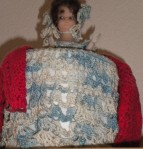
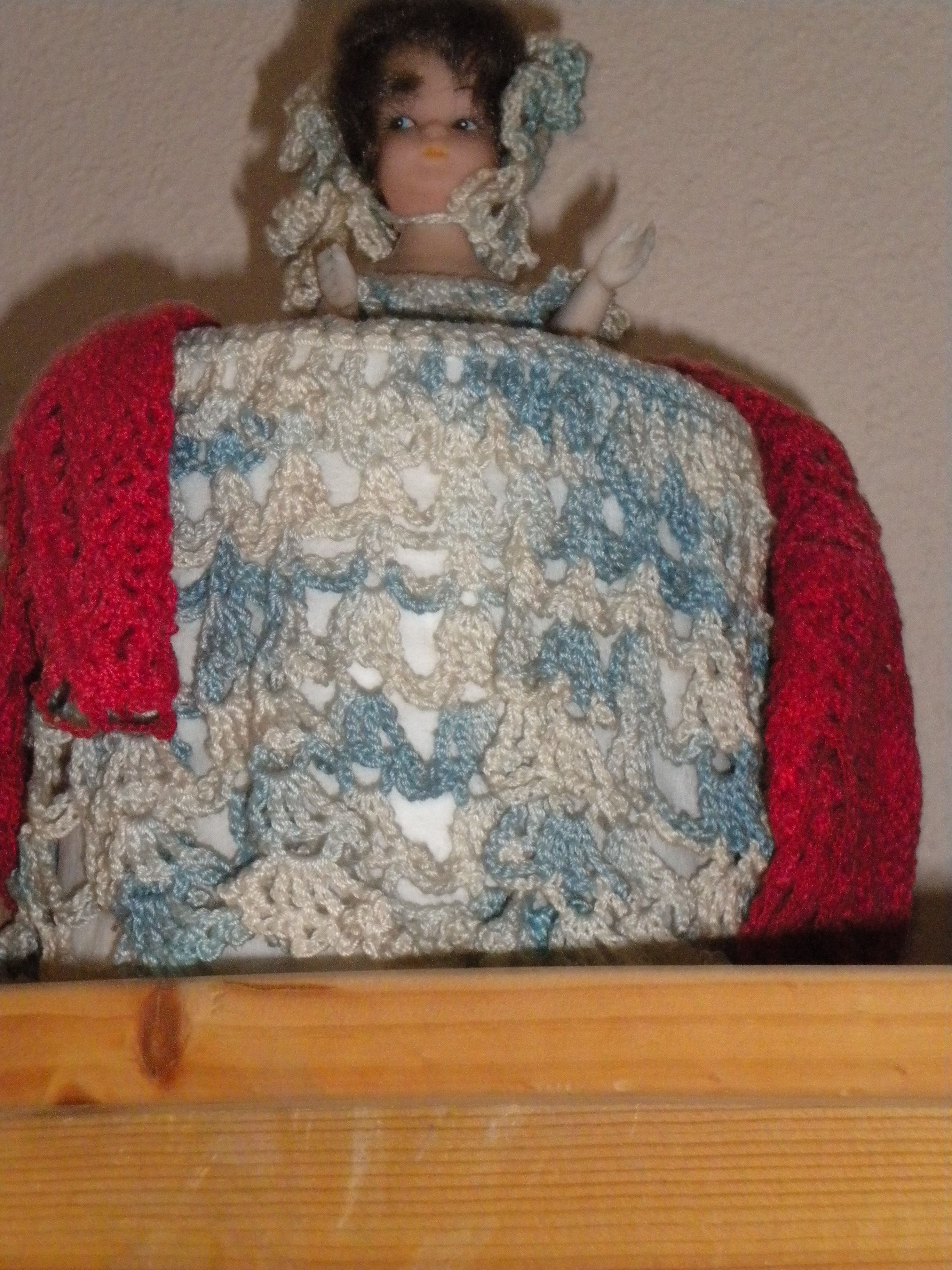
Ed’s gift to me was the doll who hid the toilet paper.

We had one of those in my bathroom growing up. It appeared about the time I was ten. My grandmother had crocheted an antebellum-style pink dress for a small doll, stuck the legs into the center of a roll of toilet paper, and without much ceremony, given it to my mother.

My grandmother was an expert seamstress and knitter, and could crochet anyone under the table. I still have a blouse she hand stitched when she was 95. I don’t wear it. I just keep it so I can marvel at the evenness of the stitching. I think those stitches would survive a nuclear explosion.

The doll who hid the toilet paper began appearing in bathrooms around the country about the same time it appeared in ours – during the early Sixties. I suspect it began as a nifty idea in Woman’s Day or Better Homes and Gardens, and then swept the nation without fanfare or being noted in daily newspapers.

Woman’s Day and Better Homes and Gardens were targeted at women whose homes would have the toilet paper neatly stashed out of sight in a closet or cabinet. I’m kind of thinking that the doll who hid the toilet paper was a way to bring graciousness to the bathroom – a way to provide guests with a brand new roll of toilet paper, thus avoiding their coming face-to-face with the dreaded final square at an awkward moment.

This could be where the phrase “Getting caught with your pants down,” comes from.

Of course, like the guest towels, I don’t think anyone ever used that roll of toilet paper the doll hid. I mean, what would you do with the doll afterwards?

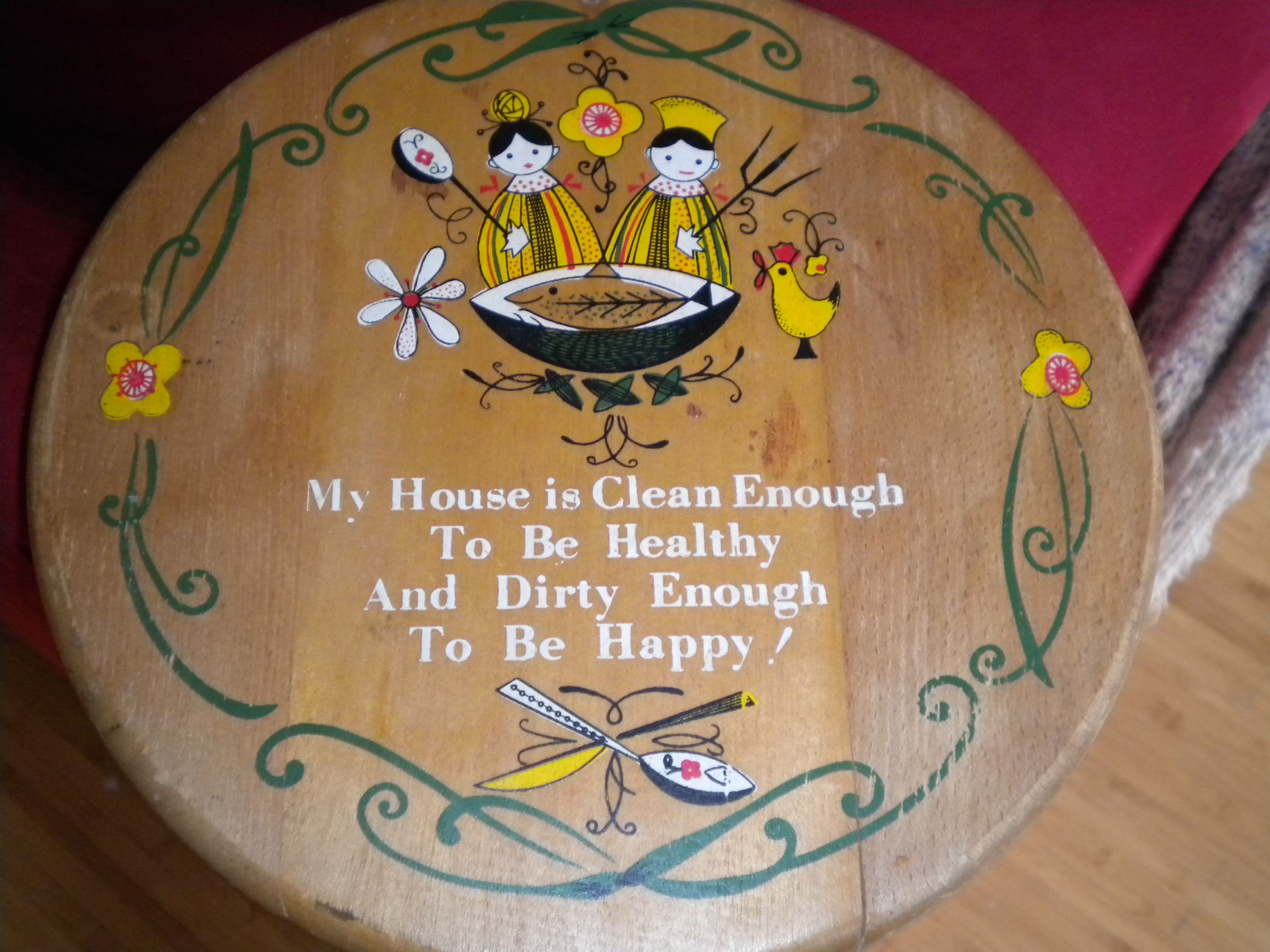
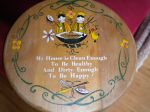
Last night, as I cleared the table, I lifted the bowl of roasted broccoli and cauliflower to reveal another domestic vestige of my childhood: the round wooden trivet it had been placed on had this inscribed on it:

My house is clean enough to be healthy, and dirty enough to be happy.

That was my mother, the daughter of the woman who made the doll who hid the toilet paper and in her nineties bragged that the manager of the elder housing community she lived in told her she kept her house nicer than anyone else.

This difference created some tension between them. Particularly when my grandmother lived with my mother for some five years. Getting her own apartment was like manna from heaven for her and for my mother. Each once again had dominion over her domain.
My mother’s home continued to be clean enough to be healthy and dirty enough to be happy. Her approach to interior decorating was haphazard. It had its own logic. At some point I discovered that the silver-coated wine-tasting cup, dangling from a chain hooked onto a picture hanger, was hung in her den not because of its significance, but because it hid the hole that revealed the layers of paint that had built up between the time my brother’s wedding picture had been hung there, and then taken down after his divorce.

It was, I guess, a version of the doll who hid the toilet paper.

She eschewed crafts that kept her at home. Traveling the world was her passion. This Christmas, as I put the hand-painted Santa Claus on the tree, I realized that it was one she had made. I remembered her kitchen table covered with vials of paint and blank precut flat wooden ornaments – angels, trees, Santas. She had resorted to crafting them in order to keep from losing her mind as the relentless march of Alzheimer’s took my father from her. Leaving the house was an exotic event for her during the time he lived at home.

My mother had wanted to be an artist, wanted to work for Disney studios. But, she came of age at a time when women had to have a particular mindset in order to be out in the world, rather in the home. She would have had to stray too far from my grandmother to do that. And so she didn’t.

It’s a shame. My mother’s hand-painted ornament reveals her talent. It was innate.

That trivet — “My house is clean enough to be healthy and dirty enough to be happy,” I think was my mother’s act of rebellion – a rebellion against what defined a woman. She, along with so many other women, got a taste of what might be possible for them when they left the home to work during World War II. Then, like many of the others, she sucked that experience up so things could get back to normal. I think they sucked it up so they could heal the men who returned from war

But, she and they were of that generation who didn’t talk about it. They just did what they thought they were supposed to do, for the good of all.

I think that beneath the surface of that normal life was a world of grief: the grief of men who had experienced the Great Depression and a War; the grief of women who had lost loved ones in the War; and the grief of women who had been given a glimpse of a world outside the home, and then had it taken from them in the name of returning to normal.

Modern conveniences (TV dinners, frozen fish sticks, and so on) were supposed to make them happier, relieve them of the chore of domestic life. I think what it did instead, was remove the artistry of domesticity, and turned it into a trap. At least that was the struggle my mother had. And I had to figure my way out of it.

Somewhere along the line, I learned that writing was my avocation. Claiming it required that I had to throw off the self-imposed limits the women in my family had accepted as just a fact of life. And then I had to reclaim my need for the art of domesticity – creating a home.

Ed Brush was my mentor. He taught me Shakespeare. He taught me that it was important to look beneath the surface – to reveal lies that kept us from our humanity.

About a month before he died, I visited with him and his wife Lee. I told him the story about the doll who hid the toilet paper. He disappeared and returned with a roll of toilet paper and the doll who had hid his toilet paper. It had been given to him by some relative who clearly was clueless about their household.
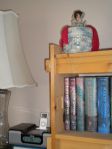
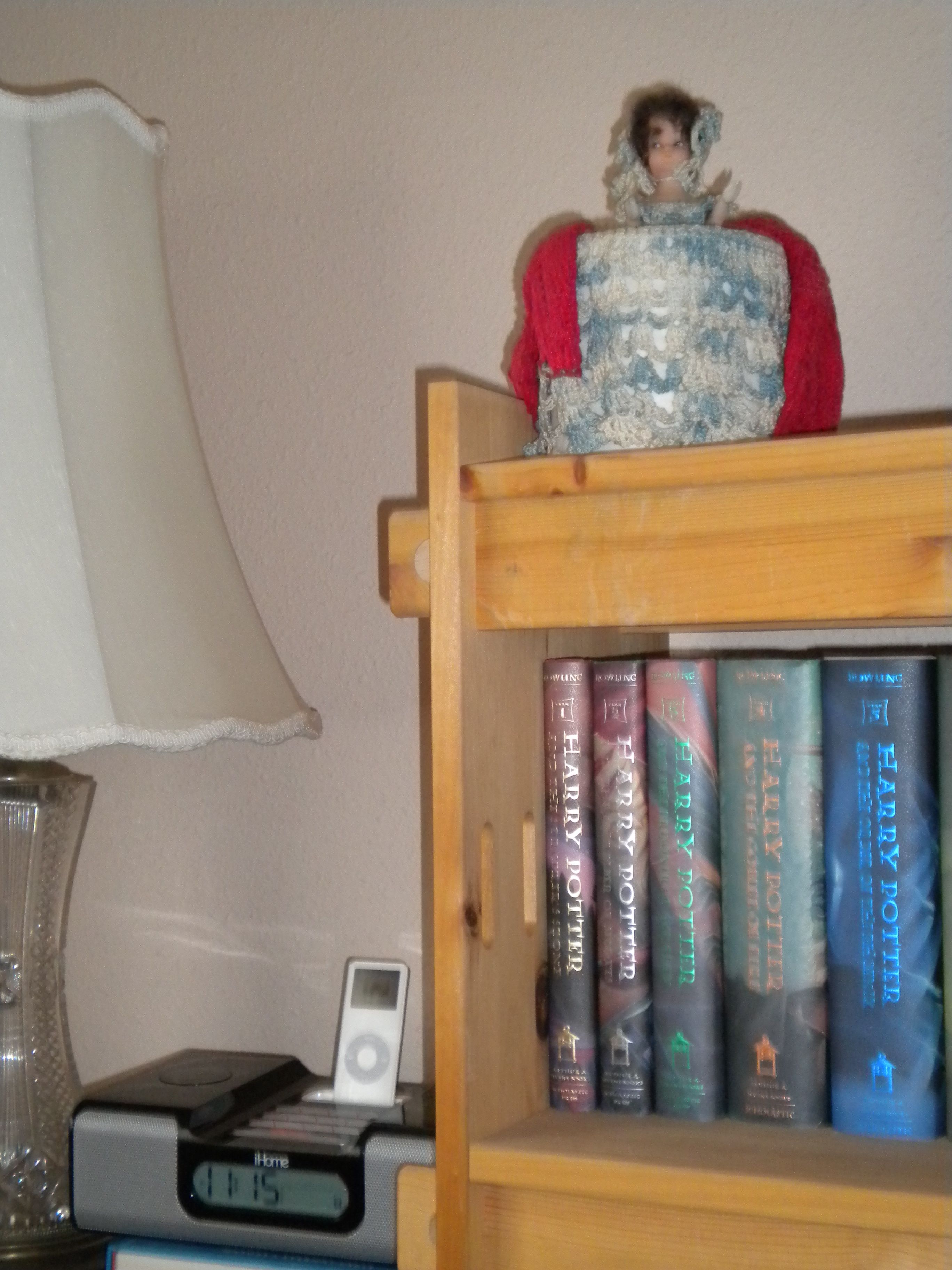
This was his gift to me. His legacy. What he wanted to pass on to me. I laughed and then asked why he had kept it all these years.

He told me to pull down the top of the doll’s dress. I did. On the protruding, plastic breasts of the doll, he had painted red dots. He had given her nipples.

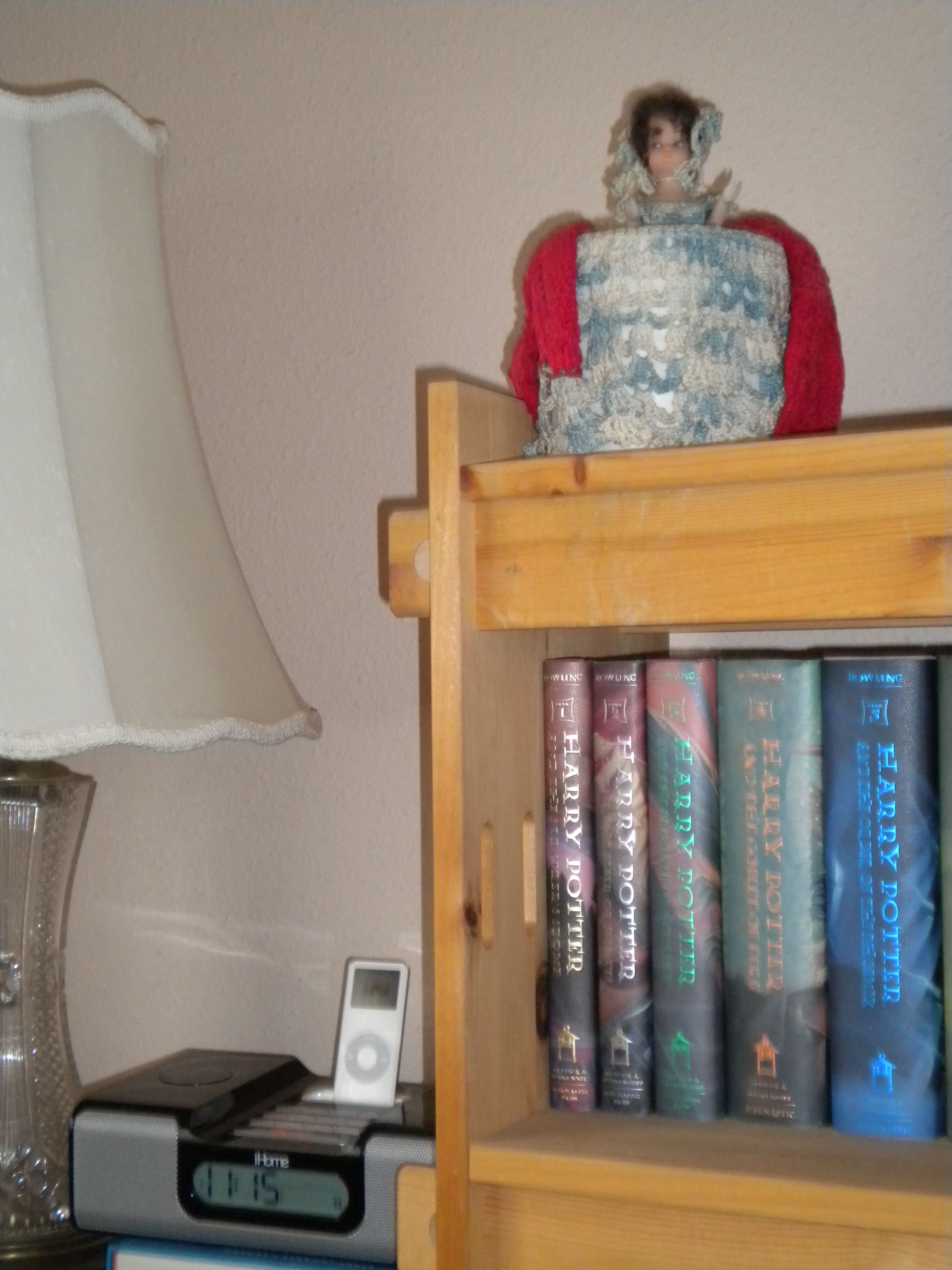
I keep his doll who hid the toilet paper on the bookshelf in my writing shed.

Fire and Ice

Some say the world will end in fire,
Some say in ice.
From what I’ve tasted of desire
I hold with those who favor fire.
But if it had to perish twice,
I think I know enough of hate
To say that for destruction ice
Is also great
And would suffice.

Robert Frost

I flew over thunderstorms as I returned from the Iowa Summer Writing Festival a couple of years ago. The clouds contained lightning – I wondered if I was witnessing the birth of a world.

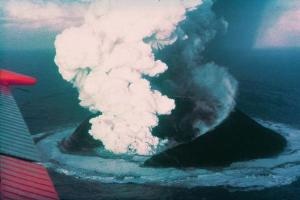
When I was in college, I saw a short film about Surtsey Volcano – a volcano that erupted out of the ocean in Iceland in November 1963. The lava met the ocean and solidified, creating an island that hadn’t existed before.

The film documented the work of the scientists who had come to the site to study it. They were on a small boat just off the island. At one point, they decided that the volcanic activity had subsided enough that a group could safely visit the island.

There was an eruption as soon as the team reached the island. The crew aboard ship filmed the spewing rocks, visibility obscured by a cloud of volcanic ash covering the island, the narrator wondering if their colleagues were alive or dead.

The activity subsided; the group returned from the island – safe and sound. They were shaken, but not with fear. Rather they were exhilarated by their experience. Their strategy had been to stay still until they saw a rock tossed by the volcano headed their way, and only then did they move.

They did not blame the volcano for being a volcano. Nor did they try to conquer it. The let the volcano be a volcano, and danced with it.

They found safety in trust and grace.

As they prepared to leave, they contemplated the fate of the island, wondering if the island would survive the erosion by the ocean, expressing sadness that it might not.

They filmed the sea gulls flying over the island, and then a tiny sprout of green emerging from the solid lava. The seeds dropped by the birds had taken hold. That gave them hope that the island might survive – the appearance of vegetation might be its salvation. Vegetation could be its defense against the energy of water.

It’s been more than forty years since I saw that film. It was perhaps thirty minutes long – if that. But it embedded itself into my consciousness with the ferocity of the vegetation on Surtsey Island.

Photos of the current eruption of the Icelandic volcano stirred that memory. How can anyone see the photographs and not stand in awe?

Do we need any further proof that change is constant and that we are not in charge?

Just ask the stranded travelers.

I think it might be important for us to pause for a moment and reflect on the enormity of this event. We are a part of something so much bigger than ourselves.

Saturday was the fortieth anniversary of Earth day. I don’t think we need to worry about saving the planet – volcanic eruptions demonstrate that the earth will endure, with or without humans.

But I think that our lives count – if for no other reason than the experience of being alive and taking in the wonder of it all.

I think that the truth of the human condition is that we are at once alone and a part of everything. We are no more than that sprout of green that appeared on Surtsey Island, but that sprout of green was the sign that the island might endure.

I think it’s important to rise above the fear I saw at the Tea Party rally I wrote about in my last post. I think I need to rise above my fear of their fear.

If we can just remember that no one gets out alive, I think we might be able to move one step closer to a world where there’s enough room at the table for everyone.

Note: Thanks to the Internet, I learned this morning that Surtsey Island survived.

And,

Okay, Rush Limbaugh does not see the volcanic activity with awe. He thinks it’s evidence of god’s anger that we passed health care reform. What a weird god that would be. That might explain Rush’s rather grumpy personality.

_______________________________

For more information about Surtsey (the volcano and the island):

http://www.allsands.com/travel/places/surtsey_ylu_gn.htm

http://geology.rockbandit.net/2008/10/30/videos-from-surtsey-island-iceland/

http://www.videotube.ronaky.com/video/_sRw_e5RA34/volcano-surtsey-and-haemay.html